How to Get Apostille for Australia in India: Step-by-Step Guide?
If you are planning to study, work, migrate, or settle in Australia, one of the most important legal steps you must complete is obtaining an apostille for Australia. Many applicants face confusion around documentation, procedures, and timelines, especially when applying from India. Understanding the apostille for Australia in India process early can save time, reduce stress, and prevent unnecessary delays.
Australia is a member of the Hague Apostille Convention, which means documents issued in India must be apostilled to be legally recognized there. The Australia apostille process acts as an international authentication that confirms your documents are genuine and acceptable for official use in Australia. Without this certification, Indian-issued documents may not be accepted by Australian universities, employers, immigration authorities, or government departments.
The need for apostille from India to Australia commonly arises for multiple purposes. Students applying to Australian universities require apostille for educational certificates. Professionals seeking overseas jobs or skilled migration visas need authenticated documents for background verification. Similarly, families applying for dependent visas may require apostille for personal certificates. Each purpose may involve different documentation, but the apostille process remains standardized.
One of the most common requirements is apostille for Australia education documents, such as degree certificates, mark sheets, diplomas, and transcripts. These documents must be apostilled before they are submitted to Australian institutions or assessment bodies. Similarly, apostille for Australia employment visa applications is mandatory for documents like experience letters, police clearance certificates (PCC), and professional credentials.
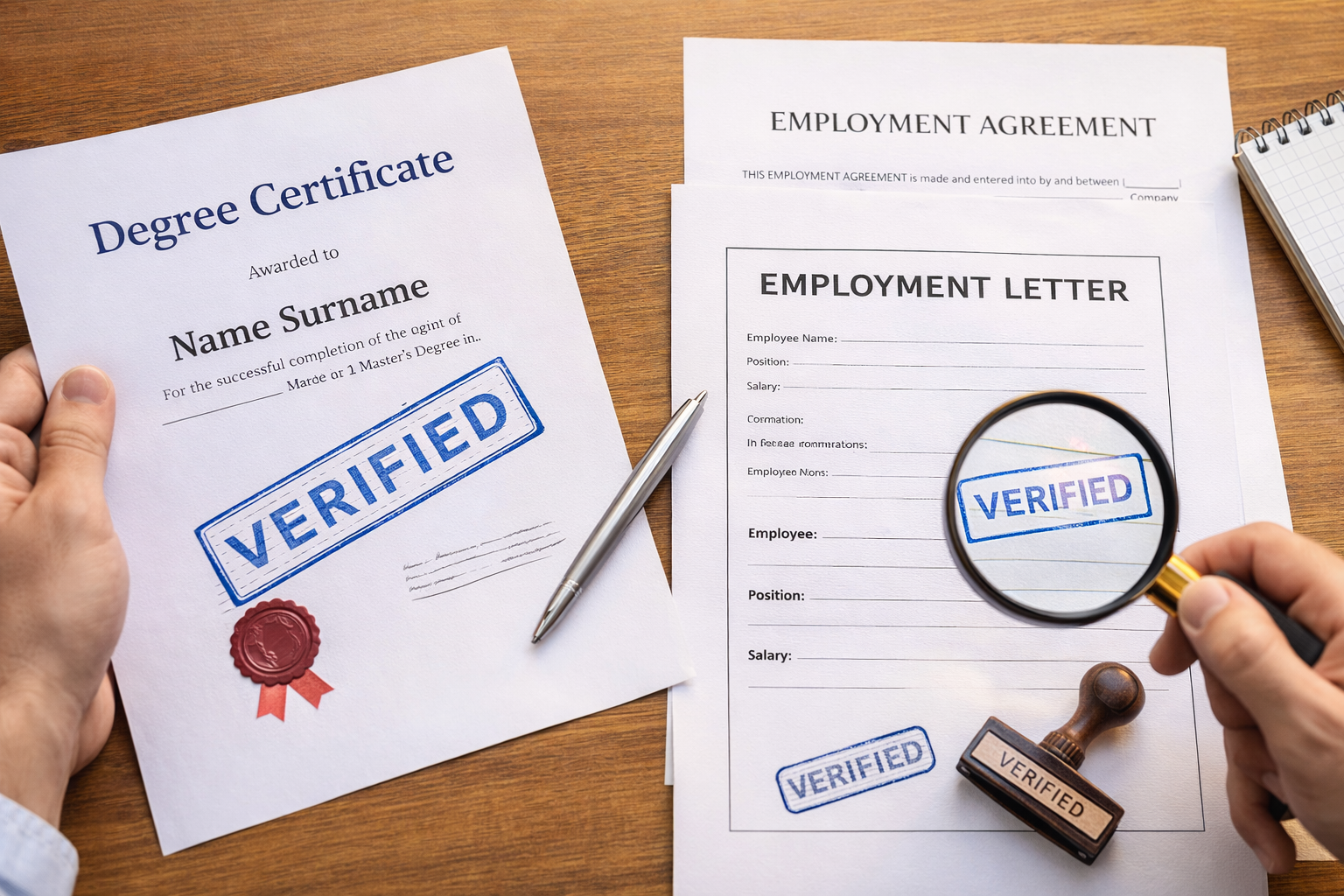
Applicants often struggle to understand the documents required for apostille for Australia. The requirements depend on the type of document—educational, personal, or commercial—but generally include original certificates and supporting identification. Knowing the correct document checklist helps avoid rejection or reprocessing.
Location also plays an important role in accessibility and turnaround time. Many applicants look specifically for apostille for Australia in Bangalore, Chennai, Mumbai, or other major cities where authorized service providers and processing centers are easily available. Using a reliable local apostille service can significantly simplify the process, especially for working professionals and students.
This step-by-step guide is designed to give you complete clarity on how to obtain apostille for Australia from India. From understanding what apostille means to learning about the exact procedure, required documents, timelines, and common mistakes, this guide covers everything you need to know in a simple and practical manner.
Whether you are applying for higher education, skilled migration, or an employment visa, completing the apostille process correctly is crucial. By understanding the apostille for Australia, following the correct Australia apostille process, and preparing the right documents required for apostille for Australia, you can ensure your application moves forward smoothly.
In the sections ahead, we will walk you through each step involved in getting apostille from India to Australia, helping you complete the process confidently and without confusion.
What Is Apostille and Why Is It Required for Australia?
An apostille is an official certification that authenticates the origin of a public document so it can be legally recognized in another country. When it comes to apostille for Australia, this certification confirms that documents issued in India are genuine and acceptable for official use in Australia. Without apostille, Indian documents may not be considered valid by Australian authorities.
Australia is a signatory to the Hague Apostille Convention, which simplifies the document legalization process between member countries. Because both India and Australia are part of this convention, the apostille for Australia in India is sufficient for legal recognition—no additional embassy attestation is required. This makes the Australia apostille process faster, more standardized, and widely accepted.
The need for apostille from India to Australia arises in several situations. Students planning higher education in Australia must submit apostilled academic documents. Working professionals applying for jobs or skilled migration visas need authenticated employment-related documents. Families applying for dependent or partner visas may require apostilled personal certificates. In all these cases, apostille acts as a mandatory legal validation.
One of the most common requirements is apostille for Australia education documents. Universities, colleges, and skill assessment authorities in Australia require apostilled degree certificates, mark sheets, diplomas, and transcripts to verify the authenticity of academic qualifications. Without apostille, educational documents may be rejected or delayed during evaluation.
Similarly, apostille for Australia employment visa applications is essential. Documents such as experience letters, professional certificates, and police clearance certificates must be apostilled to meet Australian immigration and employer requirements. Apostille ensures that these documents are legally verified and trusted by Australian authorities.
Understanding the documents required for apostille for Australia is an important part of the process. While requirements vary depending on the document type—educational, personal, or commercial—most cases require the original document along with identification proof. Ensuring that documents are complete and accurate helps avoid unnecessary delays in the apostille process.
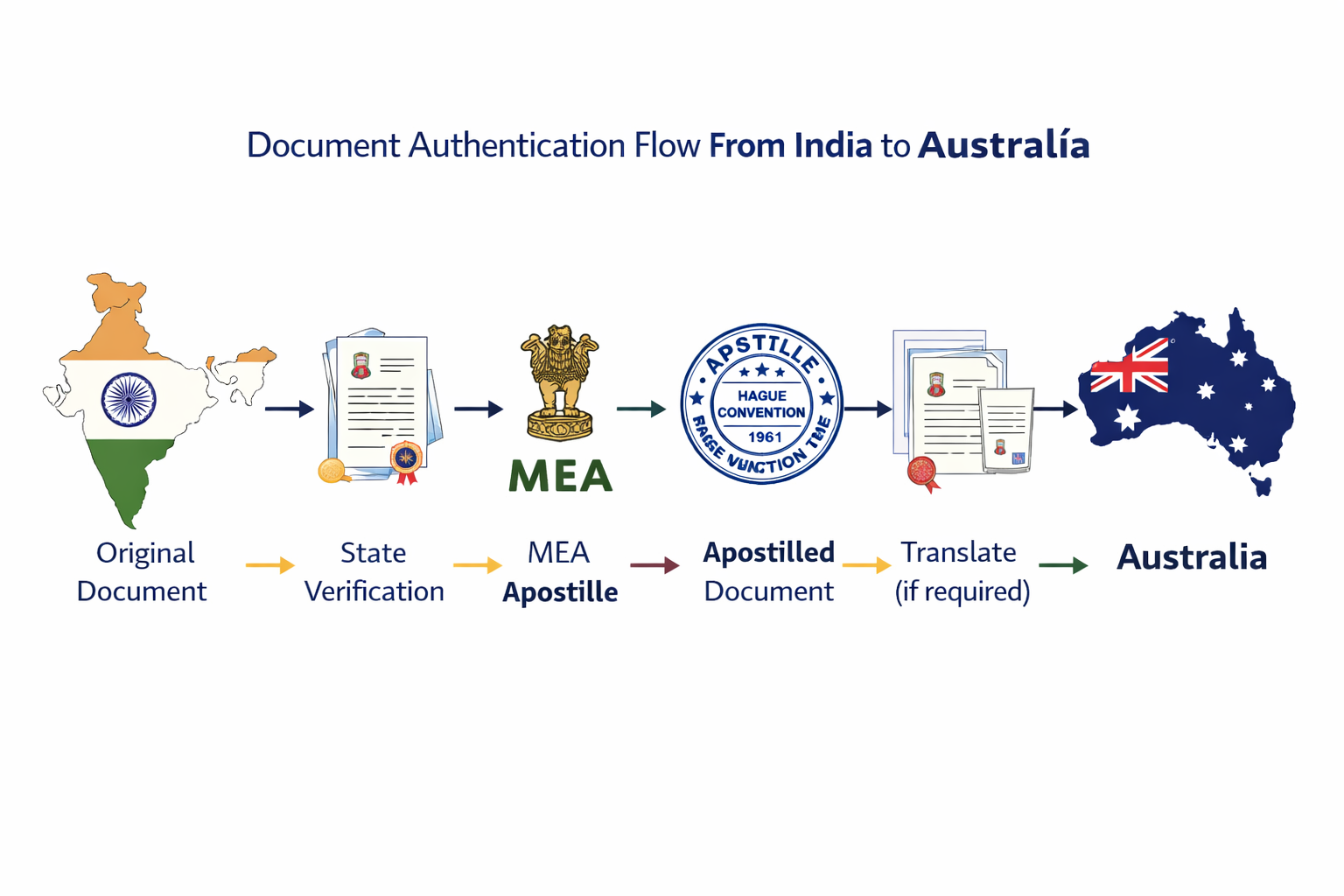
The Australia apostille process in India is handled by the Ministry of External Affairs (MEA), which is the only authority authorized to issue apostilles. In some cases, documents may require prior verification at the state level before MEA apostille is applied. Once completed, the apostille stamp is affixed to the document, making it valid for use in Australia.
Many applicants prefer professional assistance to simplify the process. Cities like Bangalore have well-established service providers offering apostille for Australia in Bangalore, helping students and professionals complete documentation efficiently. These services are especially useful for those unfamiliar with government procedures or tight application timelines.
Does Australia Accept Apostille from India?
Yes, Australia fully accepts apostille from India, and this is an important fact for anyone planning to study, work, or migrate there. If you are applying for apostille for Australia, it is essential to understand that both India and Australia are members of the Hague Apostille Convention. Because of this agreement, documents apostilled in India are legally recognized in Australia without the need for further embassy or consular attestation.
When applicants ask about apostille for Australia in India, they are often concerned about whether the certification issued by Indian authorities will be accepted overseas. The answer is clear: an apostille issued by the Ministry of External Affairs (MEA), Government of India, is valid for use in Australia. This makes the Australia apostille process simpler, faster, and more standardized compared to non-Hague countries.
The acceptance of apostille from India to Australia applies to a wide range of documents. Educational certificates, personal documents, and employment-related papers can all be apostilled and used legally in Australia. Australian universities, employers, immigration offices, and professional assessment bodies rely on apostille to verify the authenticity of Indian-issued documents.
For students, apostille for Australia education documents is mandatory when submitting degree certificates, mark sheets, diplomas, or transcripts. These documents are reviewed by Australian universities or skills assessment authorities, and apostille confirms that the credentials are genuine. Without apostille, applications may face rejection or delays.
Similarly, professionals applying for jobs or visas need apostille for Australia employment visa requirements to be met. Employment letters, experience certificates, police clearance certificates, and professional licenses often require apostille to satisfy Australian immigration and employer verification standards.
Understanding the documents required for apostille for Australia is also crucial. While requirements vary depending on document type, most cases require the original certificate and supporting identification. Some documents may also need prior state-level verification before they can be apostilled by MEA.
The Australia apostille process is centralized in India and handled exclusively by the Ministry of External Affairs. Once the apostille stamp is affixed, the document becomes valid for official use in Australia across all states and territories. No additional legalization steps are required.
Applicants often prefer to use professional assistance to ensure accuracy and speed. For those located in Karnataka, services offering apostille for Australia in Bangalore are widely available and help simplify the process. These services are particularly helpful for students and working professionals who want to avoid procedural errors or delays.
Types of Documents That Need Apostille for Australia
When applying for an apostille for Australia, it is important to understand which documents require apostille and why. Australia accepts apostilled documents from India under the Hague Apostille Convention, making apostille a mandatory legal requirement for many official purposes. The types of documents that need apostille depend on whether you are traveling for education, employment, migration, or personal reasons.
Educational Documents
One of the most common categories is apostille for Australia education documents. Students applying to Australian universities, colleges, or skill assessment authorities must submit apostilled academic records. These include degree certificates, provisional certificates, diplomas, mark sheets, transcripts, and sometimes school-leaving certificates. Apostille confirms that these documents issued in India are authentic and legally valid for use in Australia.
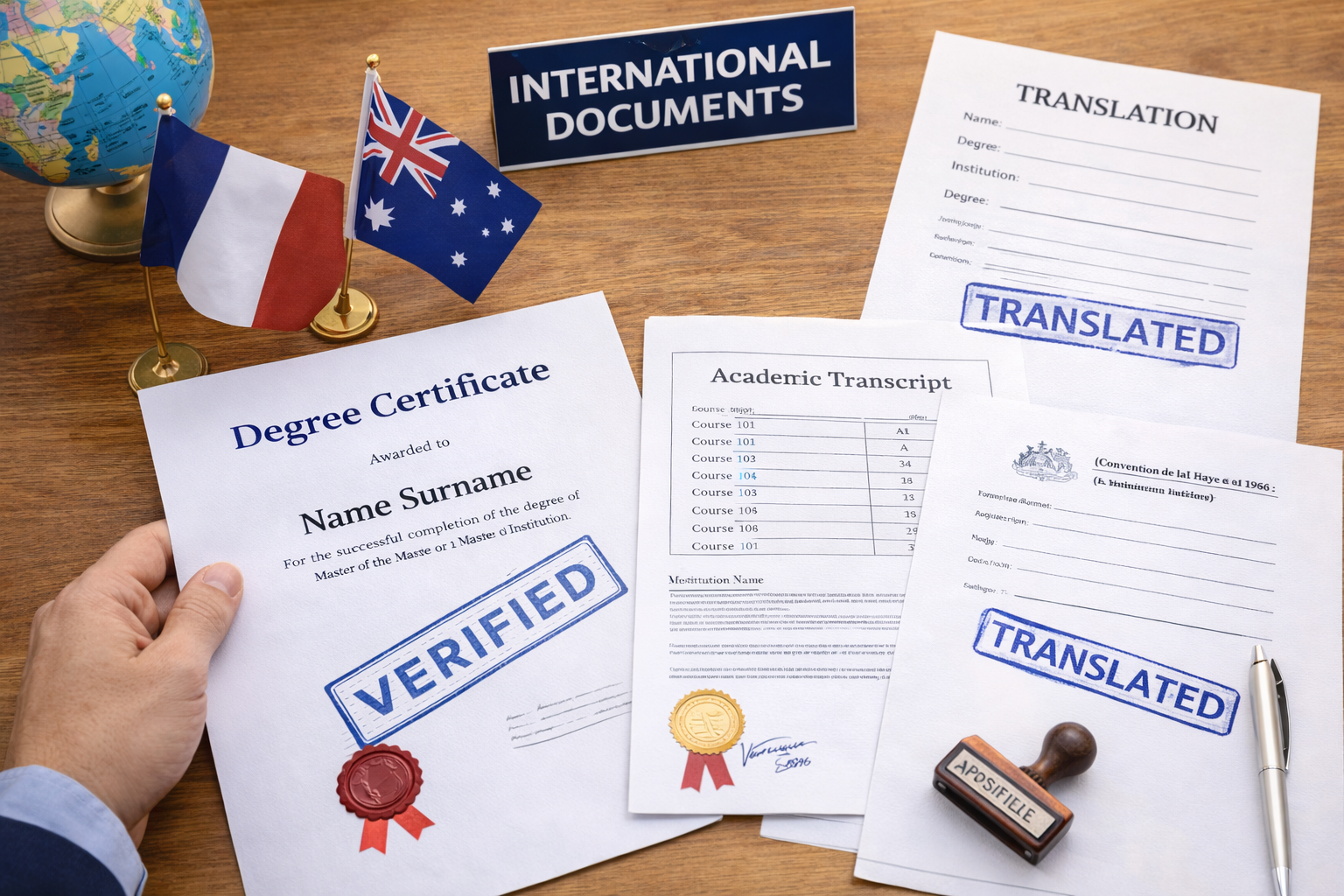
Without apostille, educational documents may not be accepted by Australian institutions, leading to delays or rejection of applications. This makes apostille a crucial step in the apostille for Australia in India process for students.
Employment-Related Documents
Professionals applying for jobs, skilled migration, or work visas must complete apostille for Australia employment visa requirements. Common employment documents include experience letters, appointment letters, professional certifications, and police clearance certificates (PCC). Australian employers and immigration authorities rely on apostille to verify that these documents are genuine.
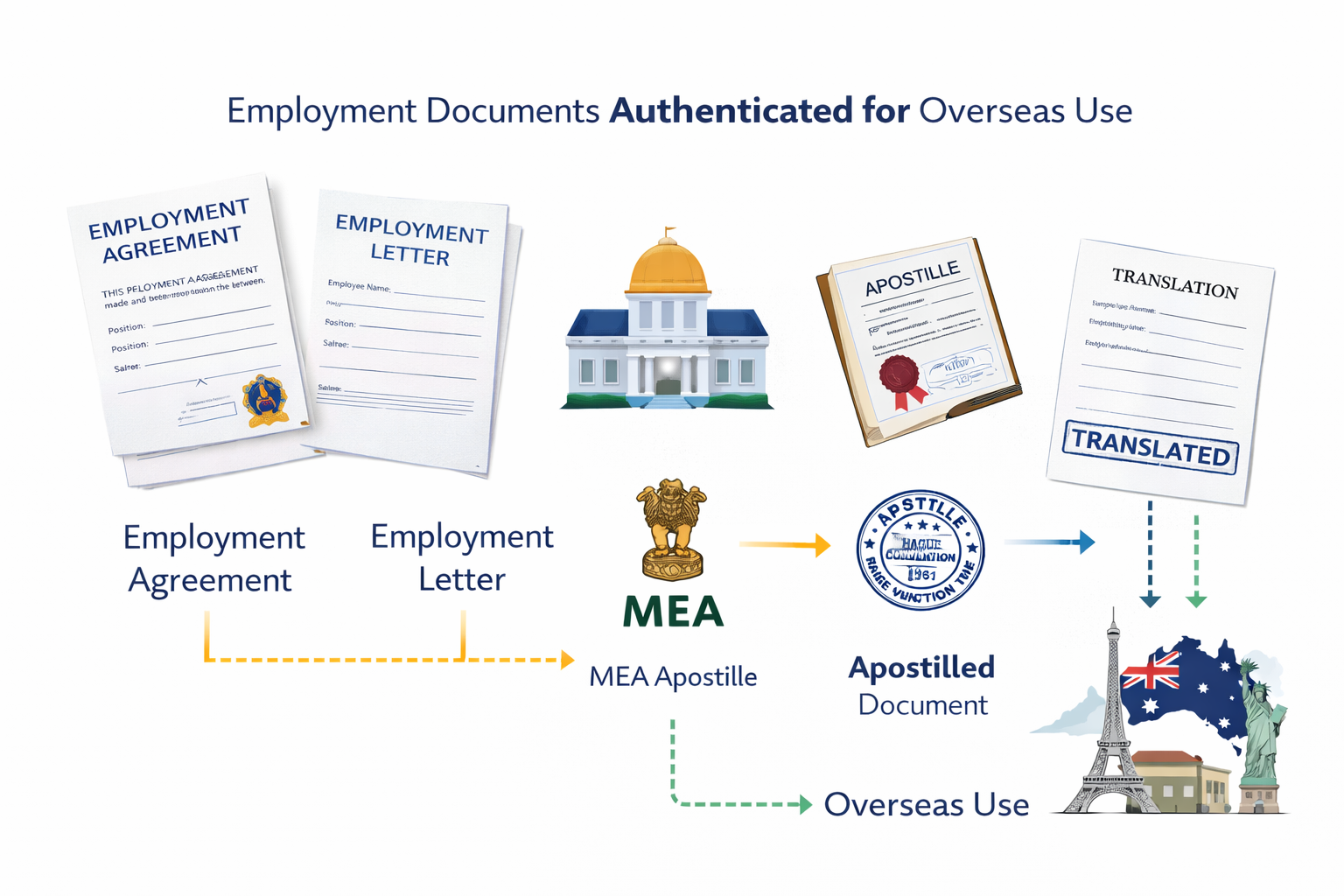
These documents form a critical part of the apostille from India to Australia process for working professionals and migrants.
Personal Documents
Personal documents are often required for family migration, dependent visas, or legal procedures in Australia. These include birth certificates, marriage certificates, divorce decrees, death certificates, and affidavits. Apostille ensures these documents are officially recognized by Australian authorities.
Understanding the documents required for apostille for Australia in this category is essential, as incomplete or incorrect submissions can lead to processing delays.
Commercial Documents
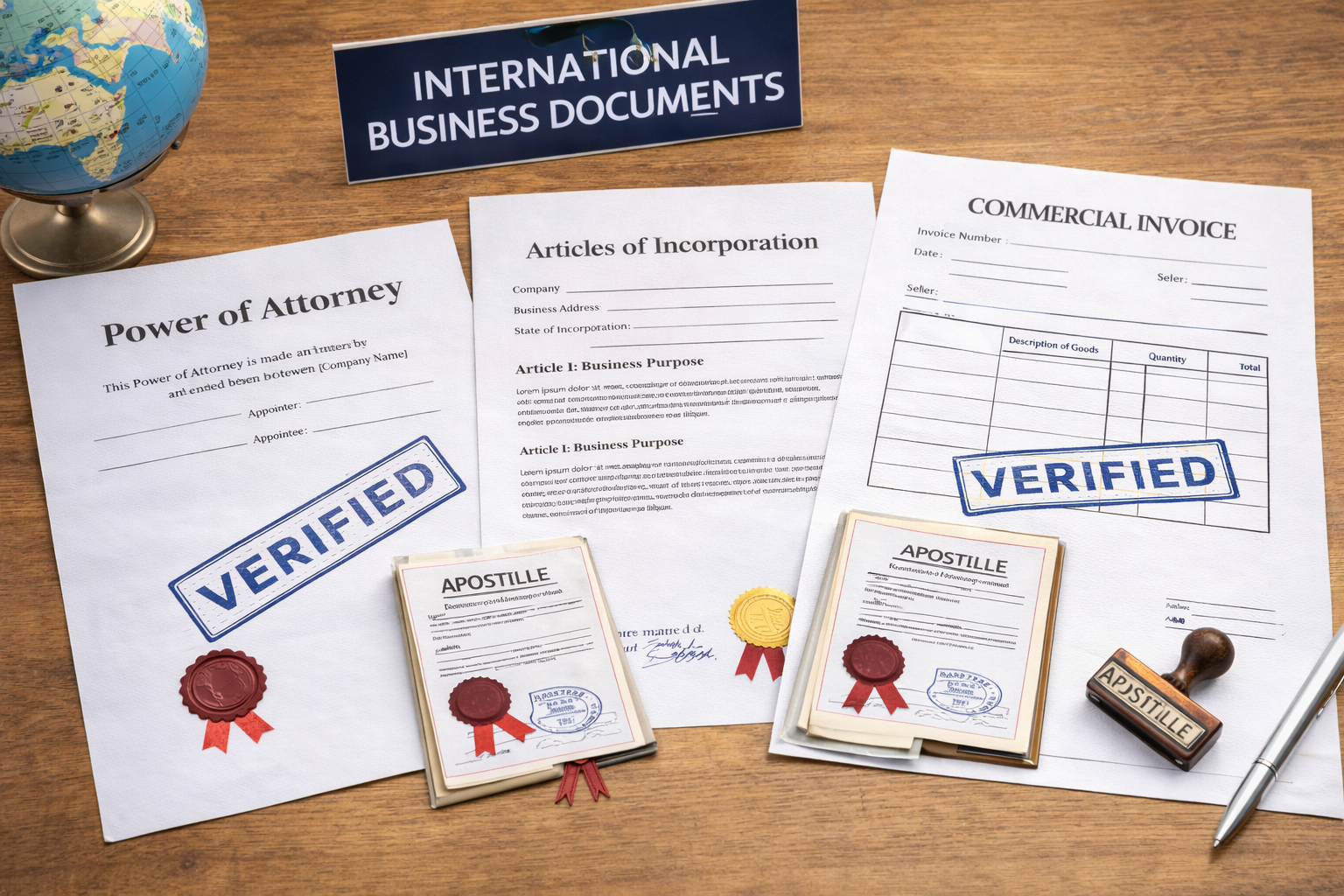
For business-related activities, commercial documents may also need apostille. These include power of attorney, company incorporation certificates, board resolutions, invoices, and agreements. Businesses expanding or operating in Australia often require apostille to validate Indian-issued commercial paperwork.
Location-Based Accessibility
Applicants often look for city-specific services to simplify the process. Professional agencies offering apostille for Australia in Bangalore and other major cities help handle document verification, submission, and follow-ups efficiently, especially for applicants unfamiliar with government procedures.
Regardless of the document type, all apostille requests follow the same Australia apostille process, which involves verification and final authentication by the Ministry of External Affairs (MEA), Government of India.
Who Needs Apostille for Australia from India?
Anyone planning to use Indian-issued documents for official purposes in Australia must obtain an apostille for Australia. Since Australia recognizes apostilled documents under the Hague Apostille Convention, apostille becomes a mandatory requirement for legal acceptance. Understanding who needs apostille from India to Australia helps applicants prepare correctly and avoid delays in their plans.

Students Planning to Study in Australia
Students are among the largest groups who require apostille for Australia in India. Universities, colleges, and skill assessment bodies in Australia require apostilled academic records to verify educational qualifications. This includes apostille for Australia education documents such as degree certificates, diplomas, mark sheets, transcripts, and sometimes school certificates. Without apostille, academic documents may not be accepted during admissions or credential assessments.
Professionals Applying for Jobs or Skilled Migration
Working professionals applying for employment or skilled migration visas must complete apostille for Australia employment visa requirements. Australian employers and immigration authorities require apostilled experience letters, appointment letters, professional certifications, and police clearance certificates. Apostille ensures that these documents are legally authenticated and trustworthy for overseas employment purposes.
Individuals Migrating or Settling in Australia
People planning long-term migration, permanent residency, or citizenship processes often need apostille for personal documents. Birth certificates, marriage certificates, divorce decrees, and affidavits must be apostilled to be legally recognized in Australia. Understanding the documents required for apostille for Australia in this category is essential to avoid application rejection.
Family Members and Dependents
Dependents applying for spouse visas, child visas, or family reunification programs also require apostille. Documents proving family relationships—such as marriage certificates or birth certificates—must be apostilled as part of the Australia apostille process. This applies equally to dependent visas and sponsorship-based immigration.
Business Owners and Entrepreneurs
Business professionals expanding operations or entering partnerships in Australia may require apostille for commercial documents. Power of attorney, company registration certificates, board resolutions, and contracts often need apostille to be accepted by Australian legal and corporate authorities. This is another important use case for apostille from India to Australia.
Applicants Using Professional Apostille Services
Due to the complexity of the process, many applicants prefer professional assistance. Those based in Karnataka and nearby regions often opt for apostille for Australia in Bangalore, where experienced service providers help manage document verification, submission, and MEA authentication efficiently. This is especially helpful for applicants unfamiliar with government procedures or facing tight deadlines.
Why Apostille Is Mandatory?
Regardless of the purpose—education, employment, migration, or business—apostille confirms that Indian documents are genuine and legally valid for use in Australia. The apostille for Australia in India process standardizes document authentication and eliminates the need for embassy legalization.
Step-by-Step Process to Get Apostille for Australia in India
Obtaining an apostille for Australia in India involves a clear, government-approved process that ensures your documents are legally valid for use in Australia. Since Australia recognizes apostille under the Hague Apostille Convention, following the correct Australia apostille process is essential to avoid rejection or delays.
Step 1: Identify the Purpose of Apostille
The first step is to determine why you need apostille. The purpose—education, employment, migration, or business—decides the type of documents to be apostilled. For example, students require apostille for Australia education documents, while professionals applying for jobs or visas need apostille for Australia employment visa documentation.
Step 2: Prepare the Required Documents
Next, collect the original documents that need apostille. The documents required for apostille for Australia may include educational certificates, experience letters, birth or marriage certificates, police clearance certificates, or commercial documents. Ensure that all documents are original, legible, and complete, as damaged or incomplete documents may be rejected.
Step 3: State-Level Verification (If Required)
Some documents, especially educational certificates, require verification from the respective State authorities before apostille. This step confirms the authenticity of the document at the issuing authority level. Not all documents require state verification, but when applicable, it is a mandatory part of the apostille for Australia in India process.
Step 4: Submission to the Ministry of External Affairs (MEA)
Once verification is completed (if needed), the documents are submitted to the Ministry of External Affairs (MEA), Government of India. MEA is the only authority authorized to issue apostille in India. During this stage, the MEA verifies the document and affixes the apostille sticker or stamp, completing the official apostille from India to Australia.
Step 5: Apostille Issuance
After MEA approval, the apostille is issued, and the document becomes legally valid for use in Australia. This apostille is accepted by Australian universities, employers, immigration authorities, and government offices without any further legalization.
Step 6: Collect the Apostilled Documents
Once apostille is completed, the documents are returned to the applicant or service provider. These apostilled documents can now be submitted confidently for Australian education, employment, or migration purposes.
Optional Step: Using Professional Apostille Services
Many applicants prefer professional assistance to simplify the process. If you are located in Karnataka, opting for apostille for Australia in Bangalore through a trusted service provider can save time and reduce errors. Professionals handle verification, MEA submission, and tracking, making the process smoother—especially for students and working professionals.
Why Following the Process Matters?
Skipping steps or submitting incorrect documents can delay your application. Whether you need apostille for Australia education documents or apostille for Australia employment visa, following the correct step-by-step process ensures acceptance in Australia without complications.
State-Level Verification Before Apostille
Before obtaining an apostille for Australia, certain documents must undergo state-level verification in India. This step is crucial in the apostille for Australia in India process because it confirms that the document is genuine and issued by a recognized authority within the state. Only after this verification can the document proceed to the Ministry of External Affairs (MEA) for final apostille under the Australia apostille process.
State-level verification is most commonly required for educational documents and some personal certificates. If you are applying for apostille for Australia education documents, such as degree certificates, mark sheets, diplomas, or transcripts, verification is usually done by the State Education Department or the issuing university. This ensures that Australian institutions can trust the authenticity of Indian academic records.
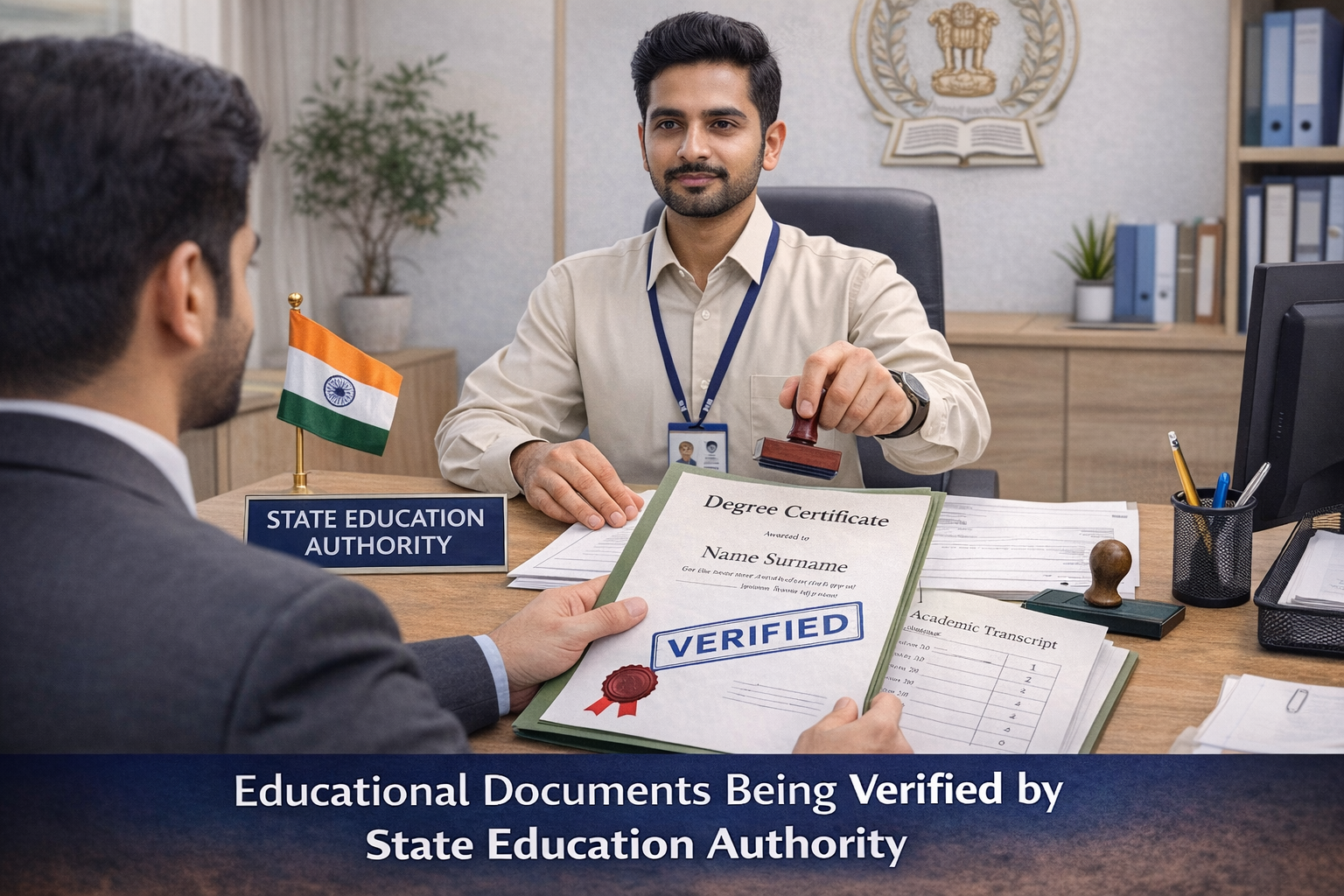
Similarly, personal documents like birth certificates, marriage certificates, or divorce decrees may require verification from the respective State Home Department. This step is especially important for applicants seeking family visas, dependent visas, or permanent residency in Australia as part of the apostille from India to Australia process.
Not all documents require state verification. For example, some apostille for Australia employment visa documents—such as police clearance certificates (PCC) or centrally issued documents—may be eligible for direct MEA apostille without state verification. However, requirements can vary based on the issuing authority and document type, making it essential to confirm the documents required for apostille for Australia in advance.
State-level verification plays a vital role in maintaining the credibility of the apostille system. It acts as a filter that prevents fraudulent or unauthorized documents from being legalized for international use. Without proper verification, the MEA may reject the document, causing delays or requiring resubmission.
The verification process itself may involve checking records with the issuing authority, stamping or endorsing the document, and confirming signatures. Processing time varies by state and document type, ranging from a few days to several weeks. This is why early planning is important when applying for apostille for Australia in India.
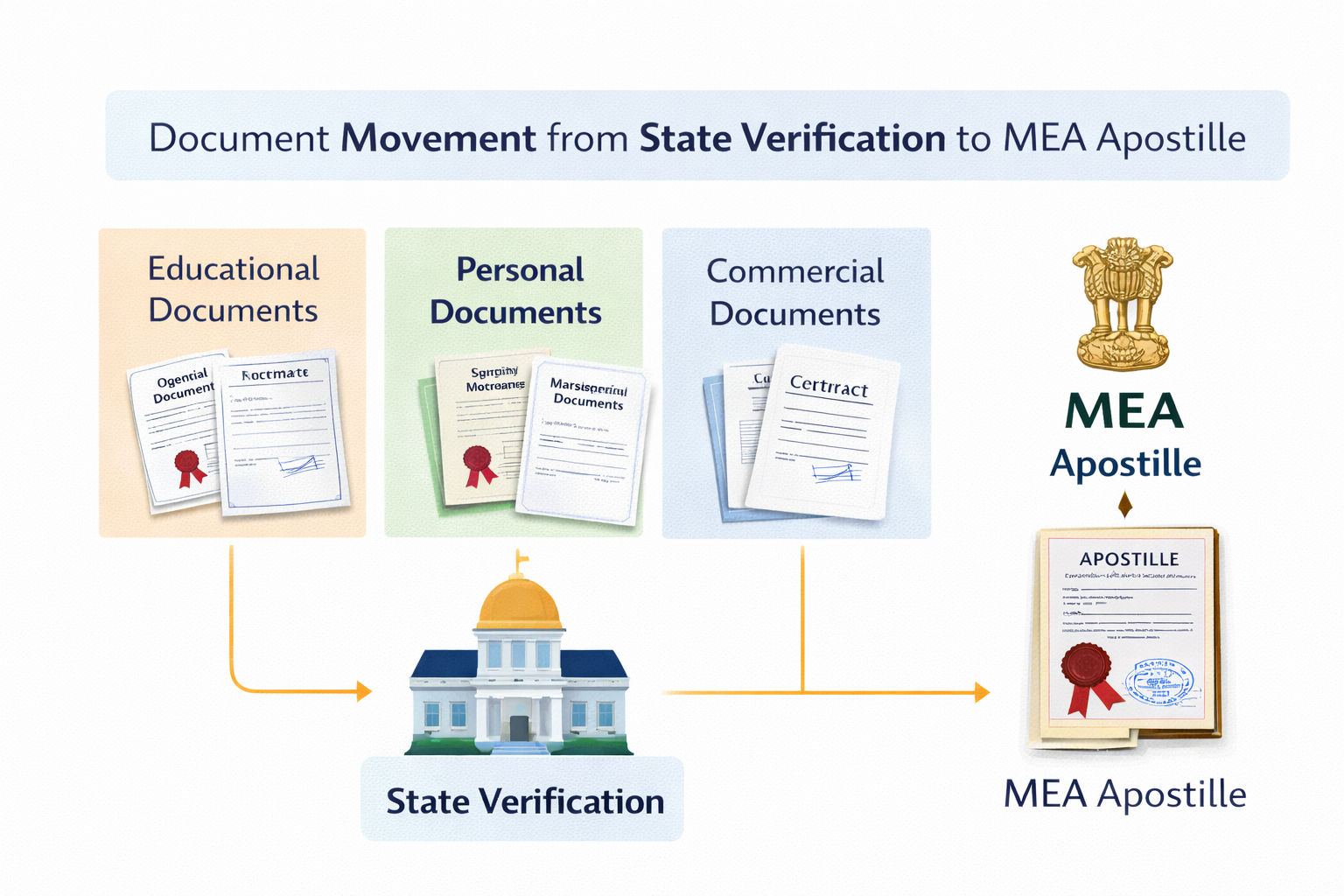
Many applicants find this step confusing due to different rules across states. To avoid delays, applicants often seek professional assistance. If you are based in Karnataka, opting for apostille for Australia in Bangalore through an experienced service provider can help manage state verification efficiently. These professionals coordinate with state authorities, track progress, and ensure documents are ready for MEA submission.
Once state-level verification is completed, the documents move to the final stage—the MEA apostille. At this point, the Australia apostille process becomes straightforward, and the apostille sticker is affixed, making the document legally valid for use in Australia.
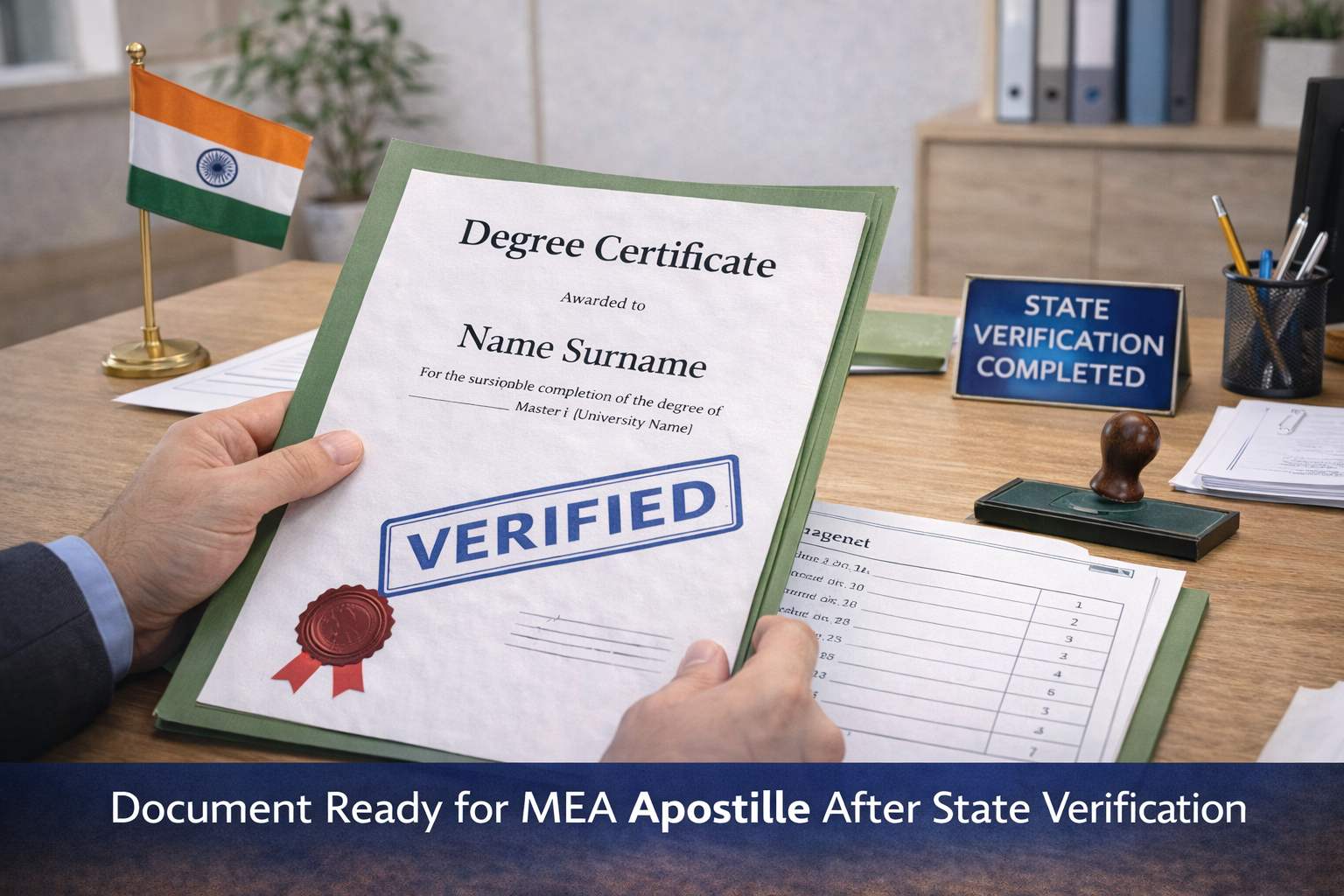
State-level verification is a critical step in obtaining an apostille for Australia, especially for educational and personal documents. It validates the authenticity of documents before they are legalized at the national level. Understanding this step within the apostille for Australia in India process helps applicants avoid unnecessary delays. Whether you are applying for apostille for Australia education documents, apostille for Australia employment visa, or personal certificates, completing state verification correctly ensures a smooth and successful apostille from India to Australia.
MEA Apostille Procedure for Australia
The MEA Apostille procedure for Australia is the final and most crucial step in legalizing Indian documents for use in Australia. Since Australia is a member of the Hague Apostille Convention, documents apostilled by the Ministry of External Affairs (MEA), Government of India, are legally accepted without any further embassy attestation. Understanding this process clearly helps applicants complete the apostille for Australia in India smoothly and without errors.
The MEA is the only authorized authority in India that can issue an apostille. Once documents reach this stage, they are officially validated for international use under the Australia apostille process. Whether you need apostille for education, employment, migration, or personal reasons, MEA authentication is mandatory.
When Does a Document Go to MEA for Apostille?
Before submission to MEA, some documents—especially educational and personal certificates—must undergo state-level verification. Once this verification is completed (if required), the document becomes eligible for MEA apostille. Centrally issued documents, such as certain police clearance certificates, may sometimes proceed directly to MEA without state verification.
This step applies equally to apostille for Australia education documents and apostille for Australia employment visa requirements.
Submission of Documents to MEA
After verification, documents are submitted to the MEA either directly through authorized channels or via registered apostille service providers. The documents required for apostille for Australia generally include the original certificate and basic identification details. Accuracy is critical at this stage, as incomplete or incorrect submissions can result in rejection.
At MEA, officials verify the authenticity of signatures, seals, and endorsements present on the document. This ensures that the document is genuine and issued by a recognized Indian authority.
Apostille Sticker Issuance
Once verification is complete, MEA affixes a computer-generated apostille sticker to the document. This sticker includes details such as:
- Country name (Australia)
- Name of the issuing authority
- Date of apostille
- Unique apostille number
- Official MEA seal
This apostille sticker makes the document legally valid for use in Australia. After this step, no additional legalization is required for apostille from India to Australia.
Acceptance in Australia
Documents apostilled by MEA are accepted by:
- Australian universities and colleges
- Employers and skill assessment bodies
- Immigration and visa authorities
- Government and legal institutions
This applies to apostille for Australia education documents, apostille for Australia employment visa, and personal certificates used for migration or family purposes.
Processing Time at MEA
The MEA apostille process is relatively fast once documents reach this stage. In most cases, apostille is completed within a few working days, depending on workload and document type. However, delays may occur if prior verification is incomplete or documentation is incorrect.
Using Professional Apostille Services
Many applicants prefer professional assistance to ensure smooth coordination with MEA. If you are based in Karnataka, opting for apostille for Australia in Bangalore through a trusted service provider can significantly reduce processing time and eliminate errors. These services handle document submission, tracking, and collection efficiently, especially for students and working professionals.
Documents Required for Apostille for Australia
Understanding the documents required for apostille for Australia is one of the most important steps in the overall legalization process. Submitting the correct documents in the right format ensures a smooth apostille for Australia in India experience and prevents unnecessary delays or rejections. Since Australia recognizes apostille under the Hague Apostille Convention, documents issued in India must be properly authenticated before they can be accepted for official use.
The type of documents required depends on the purpose of travel—education, employment, migration, or business. However, all documents must be original, valid, and issued by a recognized Indian authority to be eligible for the Australia apostille process.
Educational Documents
Students applying to Australian universities or skill assessment bodies must complete apostille for Australia education documents. Common educational documents that require apostille include degree certificates, provisional certificates, mark sheets, diplomas, transcripts, and sometimes higher secondary certificates. These documents help Australian institutions verify academic qualifications and eligibility.
Educational documents often require prior verification from the State Education Department or the issuing university before they can be apostilled. This step confirms authenticity before proceeding with apostille from India to Australia.
Employment and Professional Documents
For professionals seeking job opportunities or migration, apostille for Australia employment visa requirements apply. Employment-related documents commonly include experience letters, appointment letters, relieving letters, professional certifications, and police clearance certificates (PCC). Australian employers and immigration authorities rely on apostille to confirm that these documents are legitimate and issued by authorized entities.
Employment documents play a crucial role in visa processing and background verification, making accuracy and completeness essential.
Personal Documents
Personal documents are often required for dependent visas, family migration, or legal procedures in Australia. These include birth certificates, marriage certificates, divorce decrees, death certificates, and affidavits. Apostille validates these records for use with Australian immigration departments and government offices.
Personal documents may require verification from the State Home Department before the MEA apostille is applied as part of the apostille for Australia in India process.
Commercial Documents
Business owners and entrepreneurs expanding operations to Australia may need apostille for commercial documents. These can include power of attorney, company incorporation certificates, board resolutions, agreements, invoices, and business contracts. Commercial documents support legal and financial transactions between Indian and Australian entities.
Supporting Requirements
Along with the original document, applicants may be required to submit basic supporting information, such as applicant details or authorization forms, depending on the service provider or process route. Ensuring that all paperwork aligns with documents required for apostille for Australia guidelines helps avoid processing delays.
Role of MEA Apostille
Once documents are verified (if required), they are submitted to the Ministry of External Affairs (MEA), Government of India. The MEA applies the apostille sticker, officially completing the Australia apostille process. After this step, the document becomes legally valid for use in Australia without additional embassy attestation.
Location-Based Support
Applicants often prefer professional assistance to manage documentation accurately. Services offering apostille for Australia in Bangalore and other major cities help applicants coordinate document verification, MEA submission, and tracking efficiently. This is especially useful for students and working professionals with limited time.
Time Taken for Apostille for Australia in India
Understanding the time taken for apostille for Australia in India is crucial for students, professionals, and migrants planning their applications. Apostille timelines can vary depending on document type, verification requirements, and the processing route chosen. Knowing the expected duration helps applicants plan better and avoid last-minute delays in visas, admissions, or employment offers.
The overall time for apostille for Australia depends mainly on whether the document requires prior state-level verification before submission to the Ministry of External Affairs (MEA). The Australia apostille process generally consists of two stages: document verification (if required) and MEA apostille.
Time for Educational Documents
For apostille for Australia education documents, the processing time is usually longer. Educational certificates such as degrees, diplomas, and mark sheets often require verification from the State Education Department or the issuing university. This verification can take anywhere from 7 to 25 working days, depending on the state, institution, and workload.
Once state verification is completed, the document is forwarded to the MEA. The MEA apostille itself typically takes 2 to 4 working days, provided all documentation is correct. Overall, educational documents may take 10 to 30 working days to complete the full apostille from India to Australia process.
Time for Employment and Personal Documents
For apostille for Australia employment visa requirements, the processing time is generally shorter. Documents such as police clearance certificates (PCC), experience letters, and centrally issued documents may not always require state-level verification. In such cases, the apostille process can be completed within 3 to 7 working days.
Personal documents like birth certificates and marriage certificates may require state home department verification, which can add additional time. Depending on the state, this can take 5 to 15 working days, followed by MEA apostille in a few days.
Commercial Documents Processing Time
Commercial documents typically follow a faster route when issued by registered entities and notarized correctly. These documents may take 3 to 10 working days, depending on verification requirements and MEA workload.
Factors That Affect Apostille Timeline
Several factors influence the time taken for apostille for Australia in India:
- Type of document (educational, employment, personal, or commercial)
- State-level verification requirements
- Accuracy and completeness of documents
- Volume of applications at MEA
- Use of professional apostille services
Delays often occur when documents are incomplete or incorrectly submitted. Understanding the documents required for apostille for Australia beforehand can significantly reduce processing time.
Role of Professional Apostille Services
Many applicants opt for professional assistance to ensure faster processing. Choosing apostille for Australia in Bangalore through an experienced service provider can help coordinate verification, submission, and tracking efficiently. Professionals are familiar with state and MEA requirements, which helps avoid errors and unnecessary delays.
For students and working professionals with tight deadlines, professional services often prove to be the most time-efficient option.
Planning Your Apostille Timeline
It is advisable to start the apostille for Australia in India process at least 4 to 6 weeks in advance, especially for educational documents. This buffer ensures enough time to complete verification and apostille without impacting application deadlines.
The time taken for apostille for Australia in India typically ranges from 3 days to 30 working days, depending on document type and verification requirements. Educational documents usually take longer, while employment and personal documents are processed faster. Understanding the Australia apostille process, preparing the correct documents required for apostille for Australia, and opting for professional apostille for Australia in Bangalore services can help ensure timely completion of the apostille from India to Australia process without stress or delays.
Cost of Apostille for Australia in India
Understanding the cost of apostille for Australia in India is an important part of planning your education, employment, or migration process. While apostille is a standardized legal procedure, the total cost can vary depending on the type of document, verification requirements, and whether you choose professional assistance. Knowing the cost structure helps applicants avoid confusion and budget effectively.
The apostille for Australia itself is issued by the Ministry of External Affairs (MEA), Government of India. The MEA charges a fixed government fee per document, which applies uniformly across India. However, the overall cost often includes additional components such as state-level verification, document handling, and service charges if an agency is involved.
Cost for Educational Documents
For students, apostille for Australia education documents such as degree certificates, diplomas, mark sheets, and transcripts often involves state-level verification before MEA apostille. This verification step can add to the overall cost. As a result, educational document apostille usually costs more than centrally issued documents because it involves multiple authorities.
The total cost for educational documents depends on the issuing state, the university involved, and the number of certificates submitted. Delays or missing paperwork may also increase expenses, which is why understanding the documents required for apostille for Australia in advance is essential.
Cost for Employment and Personal Documents
For professionals applying for jobs or migration, apostille for Australia employment visa documents such as experience letters and police clearance certificates generally cost less. Many employment-related documents are centrally issued or do not require extensive state verification, reducing overall expenses.
Personal documents like birth certificates or marriage certificates may require verification from the State Home Department, which can slightly increase the cost. However, these documents are usually processed faster and at a lower cost than educational certificates.
Commercial Document Apostille Costs
Commercial documents such as power of attorney, company registration certificates, and business agreements may involve notarization and chamber of commerce verification before apostille. This can influence the total cost depending on document complexity and volume.
Professional Apostille Service Charges
Many applicants prefer professional assistance to simplify the apostille for Australia in India process. If you choose apostille for Australia in Bangalore through a service provider, the total cost may include:
- Government apostille fees
- State-level verification charges
- Service and coordination fees
- Courier or document handling charges
While service providers add to the overall cost, they often save time and reduce the risk of rejection or reprocessing—especially for students and working professionals.
Factors That Influence Apostille Cost
The total apostille from India to Australia cost depends on:
- Type of document (educational, employment, personal, or commercial)
- Requirement for state-level verification
- Number of documents
- Location and processing speed
- Use of professional apostille services
Cost Planning Tips
To manage costs effectively, applicants should prepare all documents correctly, confirm verification requirements early, and avoid last-minute processing. Starting the process early helps prevent urgent processing fees.
The cost of apostille for Australia in India varies based on document type and verification needs. Educational documents usually cost more due to state verification, while employment and personal documents are more affordable. Understanding the Australia apostille process, preparing the correct documents required for apostille for Australia, and choosing reliable apostille for Australia in Bangalore services can help ensure a cost-effective and hassle-free apostille experience.
Common Mistakes to Avoid During Apostille Process
Applying for an apostille for Australia can seem straightforward, but many applicants face delays or rejections due to avoidable mistakes. Understanding common errors in the apostille for Australia in India process can save time, money, and unnecessary stress—especially for students and professionals working with tight deadlines.
1. Submitting Incorrect or Incomplete Documents
One of the most frequent mistakes is not submitting the correct documents required for apostille for Australia. Applicants sometimes provide photocopies instead of originals, outdated certificates, or documents with mismatched details. The Ministry of External Affairs (MEA) only accepts original, valid documents. Even small discrepancies in names or dates can lead to rejection.
This is especially critical for apostille for Australia education documents, where university-issued certificates must be accurate and verifiable.
2. Skipping State-Level Verification
Many applicants are unaware that certain documents require state-level verification before MEA apostille. Skipping this step can result in delays or document rejection. Educational and personal documents often need verification from the respective State Education Department or Home Department as part of the Australia apostille process.
Understanding which documents need verification is essential when applying for apostille from India to Australia.
3. Assuming All Documents Follow the Same Process
Another common mistake is assuming that all documents follow the same apostille route. For example, apostille for Australia employment visa documents like police clearance certificates may follow a different verification path compared to educational certificates. Treating all documents the same can lead to unnecessary delays or additional costs.
4. Applying Too Late
Apostille processing can take time, especially when state verification is involved. Many applicants start the process too close to their visa, admission, or job deadlines. This increases the risk of missing timelines or paying extra for urgent services. Starting early ensures smooth completion of the apostille for Australia in India process.
5. Providing Incorrect Information
Errors in applicant details, document names, or country selection can cause issues during MEA submission. Incorrectly mentioning the destination country or providing mismatched identification details may delay the apostille from India to Australia or require resubmission.
6. Ignoring Professional Guidance
While it is possible to handle the process independently, many applicants underestimate the complexity of verification and MEA requirements. Seeking professional assistance—especially for apostille for Australia in Bangalore—can help avoid procedural errors and streamline the process.
Professional service providers are familiar with state and MEA workflows, reducing the risk of mistakes.
7. Not Verifying Document Condition
Damaged, laminated, or altered documents may be rejected during verification or apostille. Ensuring documents are in good condition and unaltered is essential, particularly for apostille for Australia education documents and employment records.
8. Overlooking Follow-Up and Tracking
Failing to track document status or follow up with authorities can lead to unnecessary delays. Active tracking ensures that any issues are addressed promptly during the Australia apostille process.
Apostille for Australia for Education, Employment & Migration
Obtaining an apostille for Australia is a mandatory legal step for Indians planning to study, work, or migrate to Australia. Since Australia recognizes apostille under the Hague Apostille Convention, Indian-issued documents must be apostilled to be legally accepted. Understanding how apostille applies to education, employment, and migration helps applicants prepare correctly and avoid delays in the apostille for Australia in India process.
Apostille for Education in Australia
Students applying to Australian universities, colleges, or skill assessment bodies must complete apostille for Australia education documents. Academic certificates are carefully reviewed by Australian institutions, and apostille confirms their authenticity.
Common educational documents include:
- Degree and provisional certificates
- Mark sheets and transcripts
- Diplomas and professional qualifications
These documents often require state-level verification before MEA apostille as part of the Australia apostille process.
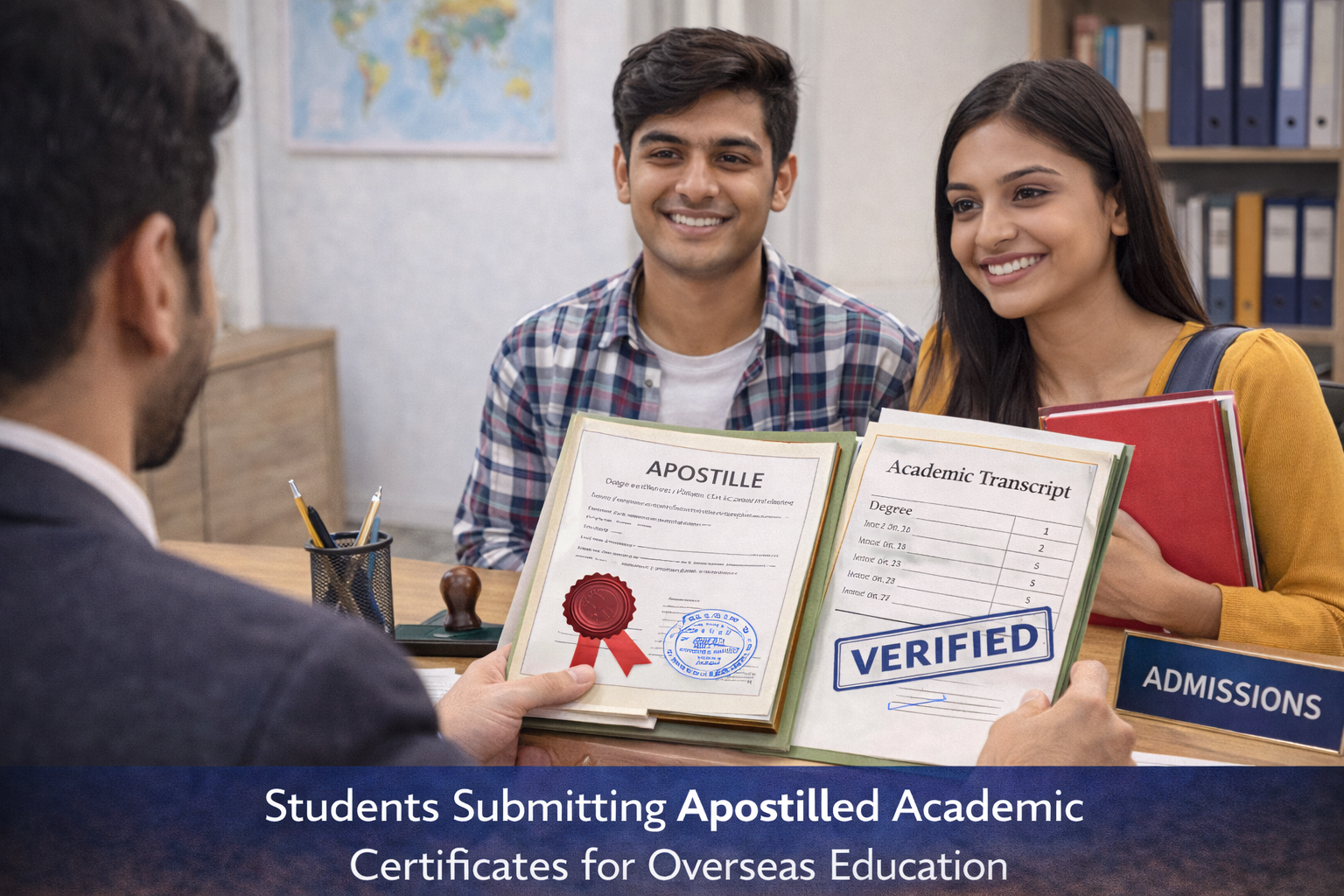
Without apostille, universities may reject or delay admission and credential assessment applications. This makes apostille a critical step for students planning higher education in Australia.
Apostille for Employment in Australia
Professionals applying for jobs or skilled visas must meet apostille for Australia employment visa requirements. Australian employers and immigration authorities require apostilled documents to verify work history and identity.
Employment-related documents include:
- Experience and appointment letters
- Professional certifications
- Police Clearance Certificate (PCC)
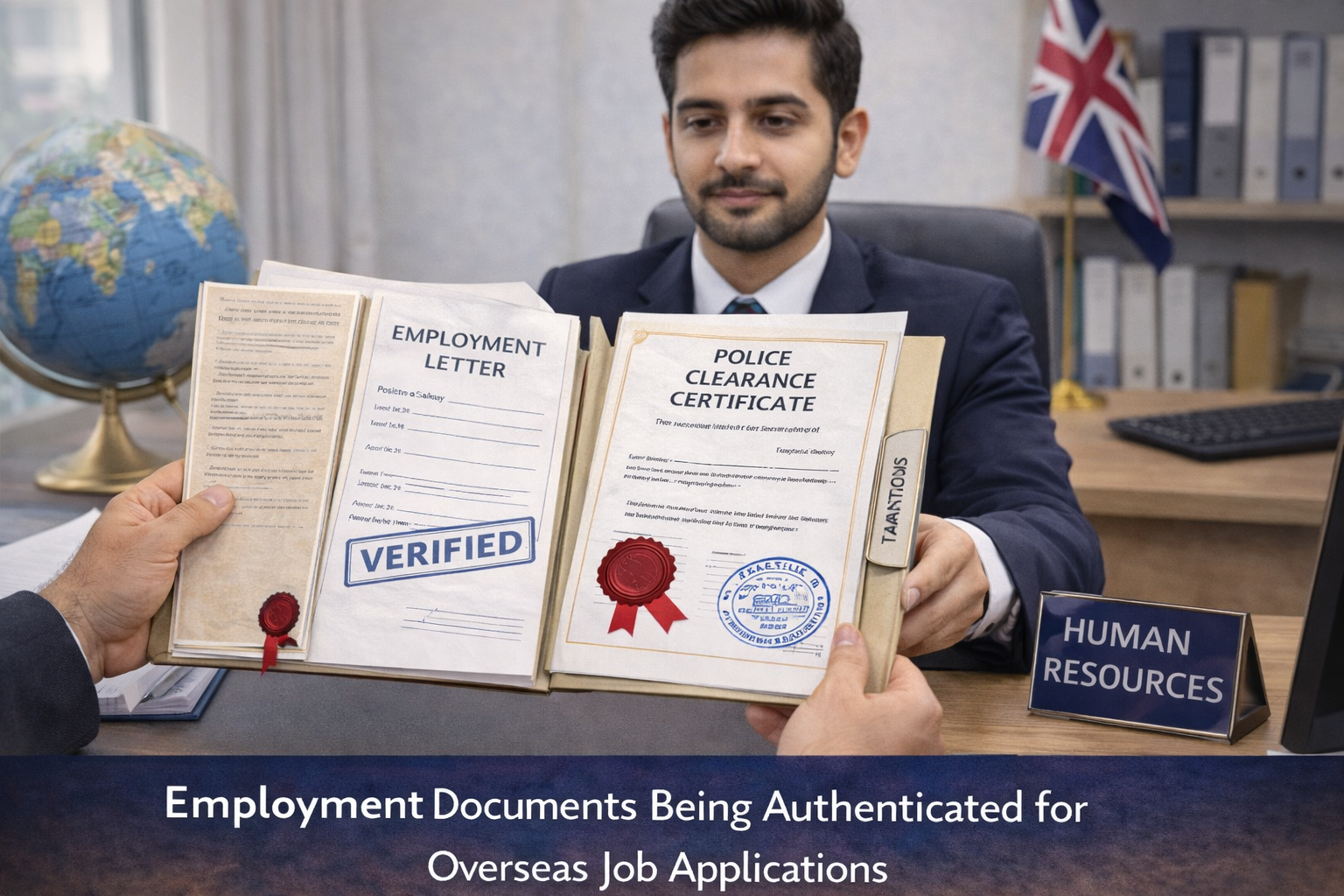
These documents are essential for background verification during job applications and visa processing. Proper apostille ensures smooth acceptance during the apostille from India to Australia process.
Apostille for Migration & Permanent Residency
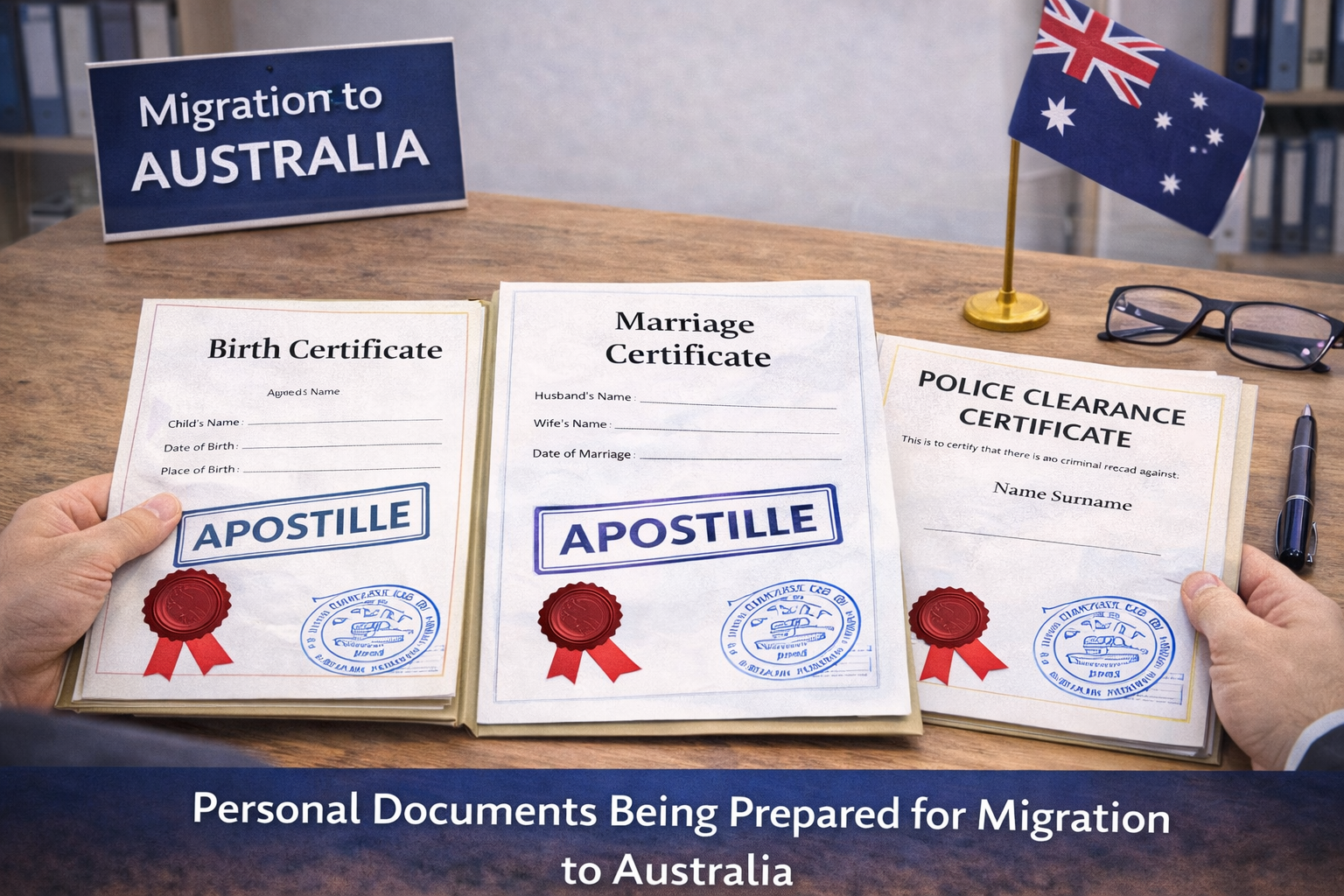
Individuals applying for permanent residency, dependent visas, or family migration must apostille personal documents. Birth certificates, marriage certificates, divorce decrees, and affidavits are commonly required for Australian immigration purposes.
Understanding the documents required for apostille for Australia in migration cases is essential, as missing or incorrect documents can delay visa approvals.
Central Role of MEA Apostille
Regardless of purpose—education, employment, or migration—all documents must be apostilled by the Ministry of External Affairs (MEA), Government of India. Once apostilled, the document is valid across Australia and does not require embassy attestation.
Location-Based Support for Faster Processing
Many applicants choose professional help for accuracy and speed. Services offering apostille for Australia in Bangalore assist students, professionals, and families by managing verification, MEA submission, and tracking efficiently. This is especially helpful for applicants unfamiliar with government procedures or facing tight deadlines.
Why Apostille Matters Across All Purposes
The apostille for Australia in India process ensures that Indian documents are legally recognized overseas. Whether it’s academic verification, employment screening, or immigration processing, apostille acts as a universal authentication accepted by Australian authorities.
Apostille is essential for education, employment, and migration to Australia. From apostille for Australia education documents to apostille for Australia employment visa and migration paperwork, completing the Australia apostille process correctly ensures hassle-free acceptance. Understanding the requirements and preparing the correct documents required for apostille for Australia, along with professional apostille for Australia in Bangalore services, helps applicants complete the apostille from India to Australia smoothly and confidently.
Is Translation Required for Apostille for Australia?
One common question applicants ask while applying for apostille for Australia is whether document translation is required. Understanding this aspect is important, as incorrect assumptions about translation can lead to delays or additional costs in the apostille for Australia in India process.
Is Translation Mandatory for Apostille?
In most cases, translation is not required to obtain an apostille in India. The Australia apostille process focuses on verifying the authenticity of the original document, not its language. As long as the document is issued by a recognized Indian authority and meets the documents required for apostille for Australia, the Ministry of External Affairs (MEA) can apostille it without translation.
Most Indian-issued documents—such as degree certificates, mark sheets, experience letters, and police clearance certificates—are already in English. Since English is an official language in Australia, these documents are widely accepted without the need for translation during apostille from India to Australia.
When Might Translation Be Required?
Translation may be required in specific situations, especially if the document is not in English. Some personal documents, such as birth or marriage certificates issued in regional languages, may need translation depending on the end-use requirement.
It is important to note that translation is usually not required for the apostille itself, but may be requested later by Australian institutions or immigration authorities. For example:
- Universities may request translated versions of educational records for evaluation
- Immigration authorities may ask for English translations of regional-language certificates
This is particularly relevant for apostille for Australia education documents or migration-related paperwork.
Does MEA Require Translated Documents?
The MEA does not mandate translation for apostille. The apostille sticker is applied to the original document, regardless of language. However, if a translated version is required by the receiving authority in Australia, it is typically done after apostille, not before.
Translation for Employment and Visa Purposes
For apostille for Australia employment visa applications, most documents are already in English. In rare cases where experience letters or personal documents are issued in a regional language, Australian employers or visa officers may request a certified English translation for review.
Certified Translation vs Apostille
Apostille and translation serve different purposes. Apostille authenticates the document’s origin, while translation helps foreign authorities understand the content. Even if translation is required, it does not replace apostille, and both may be needed separately depending on the situation.
Professional Guidance and Location-Based Support
To avoid confusion, many applicants seek professional assistance. Providers offering apostille for Australia in Bangalore often guide applicants on whether translation is needed based on document type and purpose. This ensures that applicants submit documents that meet both Indian apostille requirements and Australian acceptance standards.
Apostille vs Embassy Attestation for Australia
Many applicants are confused about whether they need apostille or embassy attestation when preparing documents for Australia. Understanding the difference between these two processes is essential to avoid unnecessary steps and delays. For anyone applying for apostille for Australia, it is important to know that Australia follows a different legalization process compared to non-Hague countries.
What Is Apostille for Australia?
An apostille is an international form of document authentication accepted by countries that are part of the Hague Apostille Convention. Since both India and Australia are members of this convention, apostille for Australia in India is the only legalization required for Indian documents to be legally recognized in Australia.
Under the Australia apostille process, documents are verified and apostilled by the Ministry of External Affairs (MEA), Government of India. Once apostilled, the document is valid throughout Australia and does not require any further embassy or consular authentication.
What Is Embassy Attestation?
Embassy attestation is a traditional legalization process required by countries that are not part of the Hague Convention. In this process, documents are verified by multiple authorities, including the issuing authority, state departments, the MEA, and finally the foreign country’s embassy.
For Australia, embassy attestation is NOT required. Applicants who mistakenly pursue embassy attestation instead of apostille often waste time and money.
Key Differences Between Apostille and Embassy Attestation
The main difference lies in acceptance and procedure. Apostille from India to Australia is a single, internationally accepted authentication issued by MEA. Embassy attestation involves multiple steps and embassy involvement, which is unnecessary for Australia.
Another major difference is processing time. Apostille is faster, more standardized, and cost-effective compared to embassy attestation. This makes apostille for Australia the preferred and legally valid option.
Which Documents Require Apostille Instead of Embassy Attestation?
All documents used in Australia must be apostilled, not embassy attested. This includes:
- Apostille for Australia education documents such as degrees, diplomas, and transcripts
- Apostille for Australia employment visa documents like experience letters and police clearance certificates
- Personal documents such as birth and marriage certificates
Understanding the documents required for apostille for Australia helps applicants avoid submitting documents for the wrong legalization process.
Why Embassy Attestation Is Not Accepted for Australia
Australian authorities—including universities, employers, and immigration departments—recognize only apostilled documents issued under the Hague Convention. Embassy-attested documents may be rejected or questioned, causing delays in visa or admission processing.
Role of Professional Apostille Services
Due to confusion between apostille and embassy attestation, many applicants seek expert help. Service providers offering apostille for Australia in Bangalore help applicants follow the correct legalization route, saving time and preventing costly errors.
These professionals ensure that documents are processed strictly under the apostille for Australia in India guidelines and submitted correctly to MEA.
How to Choose a Reliable Apostille Service Provider in India?
Selecting the right service provider is a crucial step when applying for an apostille for Australia. While it is possible to complete the process independently, many applicants choose professional assistance to avoid errors, delays, and confusion. Knowing how to choose a reliable provider ensures a smooth and stress-free apostille for Australia in India experience.
Check Experience and Expertise
The first factor to consider is the provider’s experience in handling international document legalization. A reliable agency should have proven expertise in the Australia apostille process and a clear understanding of MEA procedures, state-level verification requirements, and document handling. Experience is especially important for complex cases involving apostille for Australia education documents or multiple certificates.
Verify Transparency in Process and Pricing
A trustworthy service provider should clearly explain the entire apostille from India to Australia process. This includes verification steps, timelines, and costs. Avoid agencies that promise unrealistically fast results or hide fees. Transparent pricing and a clear explanation of documents required for apostille for Australia are signs of a credible provider.
Confirm Authorization and MEA Coordination
Since the Ministry of External Affairs (MEA) is the only authority authorized to issue apostille in India, your service provider must coordinate legally with MEA-approved channels. Reliable agencies ensure that documents are submitted correctly and tracked throughout the apostille for Australia in India process.
Location-Based Convenience
Choosing a service provider in a major city can make the process easier. If you are in Karnataka, opting for apostille for Australia in Bangalore through a local provider offers better accessibility, faster coordination, and easier document submission. Local providers are also more familiar with state verification procedures.
Assess Customer Support and Communication
Good communication is essential. A reliable apostille service provider keeps clients informed about document status, verification progress, and expected timelines. Prompt responses to queries indicate professionalism and reliability, especially for urgent cases such as apostille for Australia employment visa applications.
Look for Reviews and Reputation
Online reviews, testimonials, and word-of-mouth recommendations help evaluate a provider’s credibility. Positive feedback from students, professionals, and migrants indicates consistent service quality. This is particularly important for applicants handling apostille for Australia education documents, where delays can impact admission deadlines.
Ensure Secure Document Handling
Original documents are valuable and irreplaceable. A professional provider should have clear policies for document safety, secure handling, and reliable courier services if required. Proper handling ensures that documents submitted for apostille for Australia in India remain safe throughout the process.
Avoid Overpromises
Be cautious of providers claiming “same-day apostille” without verification or guaranteed approvals. Apostille timelines depend on document type and verification requirements. Honest service providers set realistic expectations and explain limitations of the Australia apostille process.
Apostille for Australia: FAQs
What is apostille for Australia?
An apostille for Australia is an official authentication that makes Indian-issued documents legally valid for use in Australia. Since Australia is a member of the Hague Apostille Convention, apostille issued by the Ministry of External Affairs (MEA), India, is accepted without any further embassy attestation.
Is apostille mandatory for Australia from India?
Yes. If you are using Indian documents for education, employment, migration, or legal purposes in Australia, apostille for Australia in India is mandatory. Without apostille, documents may not be accepted by Australian authorities.
Does Australia accept apostille from India?
Absolutely. Apostille from India to Australia is fully recognized because both countries are part of the Hague Convention. Apostilled documents are accepted by Australian universities, employers, immigration departments, and government offices.
Which documents require apostille for Australia?
The documents required for apostille for Australia depend on your purpose. Common documents include:
- Educational certificates (degrees, diplomas, mark sheets)
- Employment documents (experience letters, PCC)
- Personal certificates (birth, marriage)
- Commercial documents (power of attorney, business papers)
Is apostille required for education in Australia?
Yes. Apostille for Australia education documents is essential for admission to Australian universities and for skill assessment processes. Apostille confirms the authenticity of academic records issued in India.
Is apostille required for Australian employment visa?
Yes. Apostille for Australia employment visa applications is required for documents such as experience letters, professional certificates, and police clearance certificates. Apostille ensures these documents are legally verified for overseas employment.
What is the Australia apostille process in India?
The Australia apostille process generally involves:
- Document preparation
- State-level verification (if required)
- MEA apostille
Once MEA affixes the apostille sticker, the document becomes valid for use in Australia.
How long does apostille for Australia take in India?
The time varies depending on document type. Educational documents may take longer due to state verification, while employment or personal documents are processed faster. On average, apostille for Australia in India can take anywhere from a few days to a few weeks.
Is embassy attestation required for Australia?
No. Embassy attestation is not required for Australia. Apostille alone is sufficient. Embassy attestation is only needed for non-Hague countries, not for Australia.
Can I get apostille services in Bangalore?
Yes. Professional services offering apostille for Australia in Bangalore help applicants handle document verification, MEA submission, and tracking efficiently. These services are especially helpful for students and working professionals.
Is translation required for apostille for Australia?
Translation is generally not required if documents are in English. However, Australian authorities may request translations later if documents are issued in regional languages. Translation does not replace apostille and is handled separately if needed.
Can I do the apostille process myself?
Yes, but the process can be complex. Many applicants prefer professional assistance to avoid mistakes, delays, and rejections—especially when handling multiple or time-sensitive documents.


- All
- Apostille
- Attestation
- Australia Apostille
- Austria Apostille
- Bahrain Attestation
- China Attestation
- Egypt Attestation
- Embassy
- France Apostille
- Germany Apostille
- HRD
- Italy Apostille
- Kuwait Attestation
- Lithuania Apostille
- MEA
- Malaysia Attestation
- Mexico Apostille
- Netherlands Apostille
- Nigeria Attestation
- Oman Apostille
- PCC
- Philippines Attestation
- Qatar Attestation
- Saudi Arabia Attestation
- Taiwan Attestation
- Translation
- UAE Attestation
- UK Apostille
- USA Apostille
- Vietnam Attestation
- Visa
- Visa Stamping