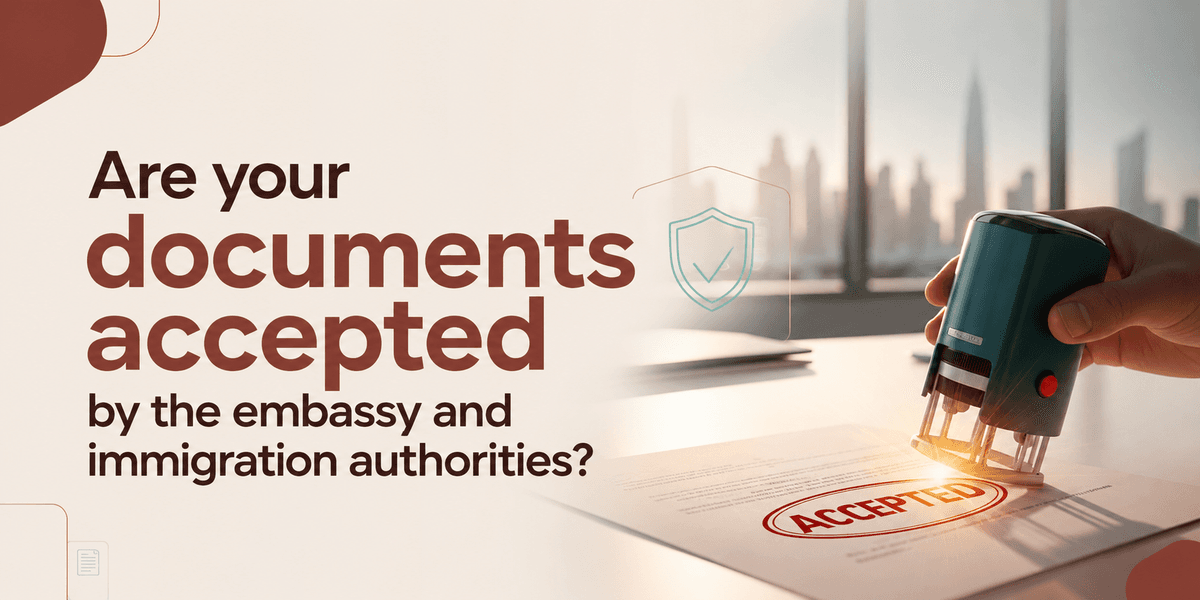
Are your documents accepted by the embassy and immigration authorities?
When planning to study abroad, work overseas, migrate to another country, establish a business internationally, or sponsor family members for foreign residency, one important question often goes unnoticed until the last minute: Are your documents accepted by the embassy and immigration authorities?
Many applicants spend significant time preparing visa applications, gathering certificates, arranging finances, and planning their international journey. However, even a perfectly prepared application can face delays or rejection if the submitted documents do not meet embassy and immigration requirements. Document acceptance is a critical aspect of international travel, employment, education, immigration, and business expansion.
Embassies and immigration departments are responsible for verifying the authenticity of documents submitted by foreign applicants. Their role is to ensure that every certificate, record, and supporting document presented during the application process is genuine, legally valid, and properly authenticated. Without proper verification, authorities cannot confidently assess an applicant's eligibility for visas, permits, residency programs, educational admissions, or employment approvals.
The acceptance of documents by embassies and immigration authorities depends on several factors, including document authenticity, proper attestation or apostille, validity period, issuing authority, completeness of information, and compliance with destination-country regulations. Understanding these requirements can help applicants avoid unnecessary delays, additional documentation requests, and potential application refusals.
One of the most common reasons documents are rejected by embassies is the lack of proper authentication. Many countries require foreign-issued certificates to undergo attestation or apostille before they can be legally recognized. Authentication confirms that the document was genuinely issued by the appropriate authority and has not been altered or falsified.
For example, a degree certificate issued in India may not automatically be accepted by an employer, university, or immigration authority in another country. The document may first need to undergo attestation or apostille procedures to establish its legal validity abroad. Without authentication, authorities may question the authenticity of the document and decline to accept it.
Educational documents are among the most frequently submitted certificates during visa and immigration procedures. Students, professionals, and skilled migrants often need to provide authenticated academic records to support their applications.
Common educational documents include degree certificates, diploma certificates, engineering certificates, nursing certificates, pharmacy certificates, MBA certificates, transcripts, mark sheets, provisional certificates, and technical qualification certificates. Universities, licensing authorities, employers, and immigration departments use these records to verify educational achievements and professional qualifications.
When educational documents are not properly authenticated, applicants may face admission delays, employment complications, or immigration processing issues. Many embassies require educational certificates to be attested by designated authorities before they can be considered valid.
Personal documents are another category frequently reviewed by immigration and embassy officials. These records help establish identity, family relationships, civil status, and legal eligibility for various immigration programs.
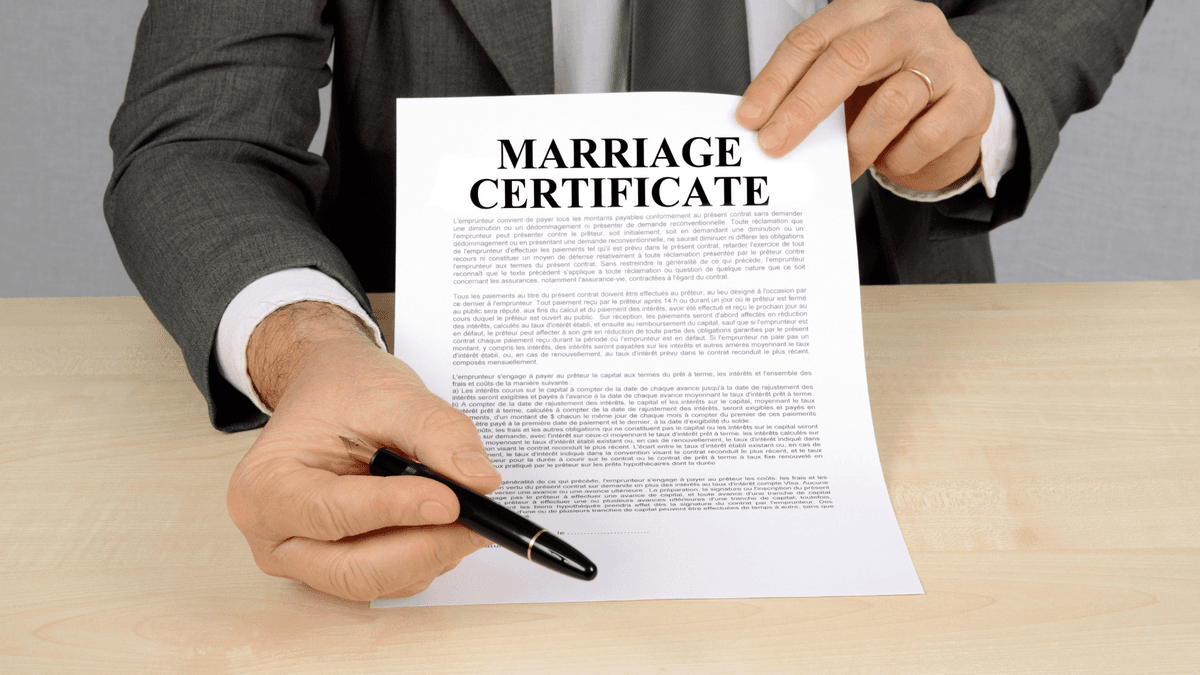
Birth certificates, marriage certificates, divorce certificates, death certificates, adoption certificates, family certificates, and affidavits are commonly submitted during visa and residency applications. These documents often require attestation or apostille before being accepted by foreign authorities.
For example, an applicant sponsoring a spouse for residency may need an authenticated marriage certificate. Similarly, parents applying for dependent visas for their children may need attested birth certificates to establish family relationships.
Police Clearance Certificates (PCC) are also frequently reviewed by immigration authorities. Many countries require applicants to provide PCC documents as evidence of good conduct and clean criminal records. Immigration departments use these certificates to assess character requirements and security considerations.
A PCC that has not been properly authenticated may not be accepted by the destination country's authorities. Depending on the country, the certificate may require attestation or apostille before submission. Additionally, applicants must ensure that the PCC remains valid throughout the application process, as expired certificates are often rejected.
Medical certificates represent another important category of documentation. Some countries require medical fitness reports, vaccination records, or health certificates as part of visa and immigration procedures. Healthcare professionals seeking overseas employment may also need authenticated medical qualifications and professional credentials.
Embassies carefully evaluate medical documentation to ensure compliance with public health regulations and professional licensing requirements. Proper authentication helps establish the credibility and validity of these records.
Commercial documents are equally important for businesses expanding internationally. Companies involved in exports, imports, foreign investments, partnerships, and international trade often need to submit authenticated commercial records to embassies, consulates, and government authorities.
Examples of commercial documents include Certificates of Incorporation, Memorandums of Association, Articles of Association, Commercial Invoices, Certificates of Origin, Agency Agreements, Board Resolutions, Trade Licenses, and Power of Attorney documents.
Commercial document authentication helps businesses demonstrate legal status, ownership, and operational legitimacy. Many countries require embassy attestation of commercial records before approving business registrations, investment projects, or contractual arrangements.
One of the most important factors affecting document acceptance is determining whether the destination country requires Attestation or Apostille. These two authentication systems serve similar purposes but apply to different groups of countries.
Attestation is generally required for countries that are not members of the Hague Apostille Convention. The process involves verification by multiple authorities, including state departments, the Ministry of External Affairs, and the embassy of the destination country.
Countries such as the United Arab Emirates, Saudi Arabia, Qatar, Kuwait, Bahrain, and Oman commonly require embassy attestation. Documents submitted to authorities in these countries often need embassy legalization before they can be accepted.
Apostille is a simplified authentication process used among Hague Convention member countries. Instead of embassy legalization, an Apostille certificate issued by the competent authority confirms document authenticity.
Countries such as Germany, France, Italy, Spain, Portugal, the Netherlands, Australia, New Zealand, Switzerland, Singapore, and many others accept apostilled documents. An Apostille certificate generally eliminates the need for additional embassy authentication.
Many applicants mistakenly assume that once a document is authenticated, it will be accepted universally. However, embassies and immigration authorities evaluate documents based on country-specific regulations. A document authenticated for one country may not necessarily satisfy the requirements of another.
Another common issue involves document validity periods. Certain certificates, particularly Police Clearance Certificates, Medical Certificates, and some civil documents, may have expiration dates or limited periods of acceptance. Submitting outdated records can result in rejection or requests for updated documentation.
Applicants should carefully review the validity requirements of their destination country before submitting documents. Ensuring that certificates remain current throughout the application process can help prevent delays.
Name discrepancies represent another frequent reason for document rejection. Embassies often compare names across passports, educational certificates, birth certificates, marriage certificates, and other supporting documents. Differences in spelling, initials, surname formats, or legal name changes can create complications.
If discrepancies exist, applicants may need supporting affidavits, name correction certificates, or additional legal documentation to establish consistency. Reviewing all records before submission is highly recommended.
Incomplete documentation is another challenge faced by many applicants. Immigration authorities frequently require supporting documents in addition to primary certificates. Missing records, unsigned forms, incomplete translations, or absent authentication stamps can delay processing or result in application rejection.
Translation requirements are especially important when documents are issued in languages not recognized by the destination country. Certified translations may be required alongside authenticated original documents. Failure to provide approved translations can affect document acceptance.
Many applicants are unaware that embassies also evaluate document quality. Certificates that are damaged, torn, altered, illegible, or improperly laminated may be rejected during verification. Maintaining documents in good condition helps facilitate smoother authentication and acceptance procedures.
Professional licensing authorities often impose additional requirements beyond embassy and immigration regulations. Doctors, nurses, pharmacists, engineers, architects, teachers, and accountants may need authenticated educational qualifications, professional experience certificates, and licensing records before obtaining authorization to practice abroad.
In these cases, document acceptance depends not only on embassy requirements but also on the standards established by professional regulatory bodies. Proper preparation helps applicants meet both immigration and professional registration requirements.
Students applying to international universities face similar considerations. Educational institutions often review authenticated academic credentials before issuing admission letters. Some universities may request attested degrees, apostilled transcripts, language proficiency certificates, and other supporting records.
Failure to provide correctly authenticated educational documents can affect admission decisions and delay enrollment processes. Students should verify university requirements well before application deadlines.
Business owners and investors seeking international opportunities must also ensure document acceptance. Foreign governments often require authenticated commercial records before approving company registrations, investments, branch offices, or partnership agreements.
Commercial documentation requirements may vary depending on the industry, investment size, and destination country. Early preparation helps businesses avoid regulatory delays and administrative obstacles.
Because documentation requirements can be complex, many applicants choose professional attestation and apostille services. Experienced consultants understand authentication procedures, embassy regulations, immigration standards, and country-specific requirements.
Professional assistance helps applicants identify required documents, verify authentication needs, prepare supporting records, and complete legalization procedures efficiently. This reduces the risk of errors and improves the likelihood of successful document acceptance.
Secure handling of original certificates is another important consideration. Educational records, civil documents, and commercial certificates often represent valuable legal and professional assets. Professional document service providers help ensure secure processing, tracking, and management throughout the authentication journey.
Technology has improved many aspects of visa and immigration processing, but document authentication remains a critical requirement. Even with online applications and digital systems, embassies and immigration authorities continue to rely on authenticated records to verify applicant information and establish credibility.
As international mobility continues to grow, the importance of document acceptance cannot be overstated. Whether pursuing higher education, accepting an overseas job offer, immigrating permanently, sponsoring family members, or expanding a business internationally, properly authenticated documents serve as the foundation of successful applications.
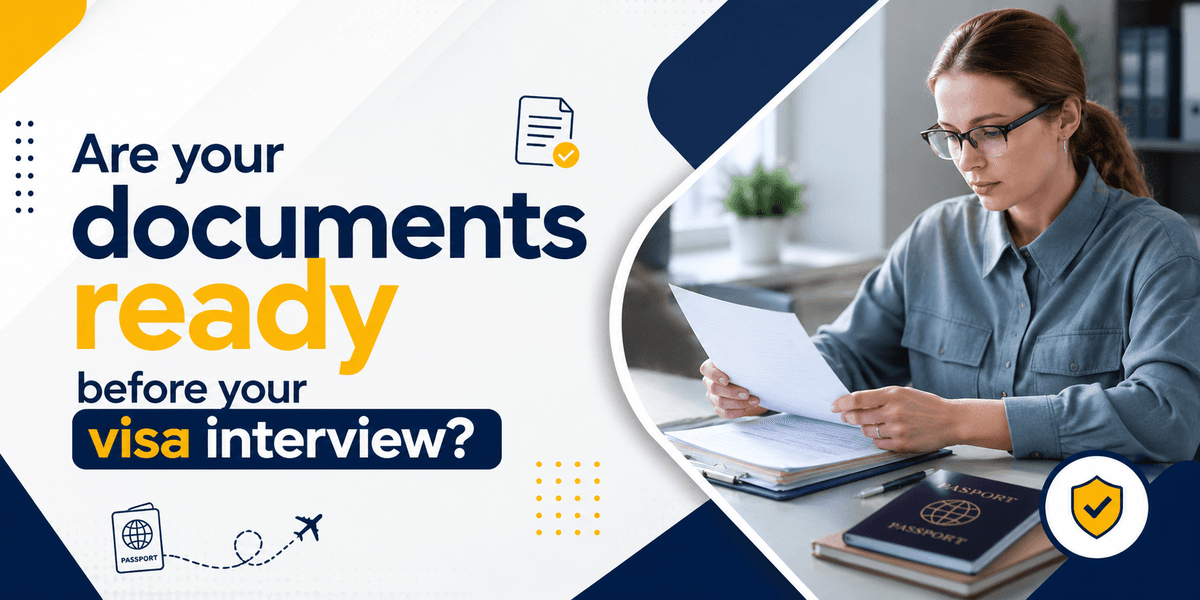
Before submitting any application, individuals should ask themselves an important question: Are your documents accepted by the embassy and immigration authorities?
Taking the time to verify authentication requirements, review document validity, resolve discrepancies, obtain necessary translations, and complete attestation or apostille procedures can significantly improve application outcomes. Properly prepared documentation demonstrates professionalism, compliance, and readiness for international opportunities.
Document acceptance is not simply an administrative formality. It is a crucial step that enables governments, employers, universities, licensing authorities, and immigration departments to recognize and trust foreign-issued certificates. Without proper acceptance, even highly qualified applicants may face unnecessary challenges.
Whether your goal is education, employment, immigration, family reunification, professional licensing, or international business expansion, ensuring that your documents meet embassy and immigration requirements is one of the most important investments you can make in your future.
By preparing authenticated, accurate, and legally recognized documentation, you position yourself for smoother approvals, faster processing, and greater confidence as you pursue opportunities around the world.


- All
- Apostille
- Attestation
- Australia Apostille
- Austria Apostille
- Bahrain Attestation
- China Attestation
- Egypt Attestation
- Embassy
- France Apostille
- Germany Apostille
- HRD
- Italy Apostille
- Kuwait Attestation
- Lithuania Apostille
- MEA
- Malaysia Attestation
- Mexico Apostille
- Netherlands Apostille
- Nigeria Attestation
- Oman Apostille
- PCC
- Philippines Attestation
- Qatar Attestation
- Saudi Arabia Attestation
- Taiwan Attestation
- Translation
- UAE Attestation
- UK Apostille
- USA Apostille
- Vietnam Attestation
- Visa
- Visa Stamping