
What Is the Hague Apostille Convention? Why It Matters
1. What Is the Hague Apostille Convention?
The Hague Apostille Convention is an international treaty formally known as the Convention of 5 October 1961 Abolishing the Requirement of Legalization for Foreign Public Documents.
It was developed under the Hague Conference on Private International Law (HCCH) to make the international use of public documents simpler and more efficient.
Before the Convention, a document issued in one country could need several layers of authentication before it could be accepted in another country. This process often involved local government verification, authentication by a foreign ministry, and legalization by the destination country's embassy or consulate.
The Hague Apostille Convention simplified this procedure by introducing a standardized certificate called an apostille.
Under the Convention, an apostille issued by the competent authority of the country where the document originates generally replaces the traditional diplomatic or consular legalization requirement when the Convention applies between the issuing and receiving countries.
What Is the Main Purpose of the Convention?
The primary purpose is to simplify the international circulation of public documents.
It helps:
- Reduce multiple authentication stages.
- Establish a standardized international certificate.
- Make it easier to use public documents abroad.
- Reduce administrative work for applicants and government authorities.
- Improve confidence in the origin of official documents.
- Support international education, employment, immigration, legal matters, and business transactions.
The Convention creates a common framework for participating countries without requiring them to adopt identical domestic document systems.
2. What Is an Apostille Certificate?
An apostille certificate is an official authentication certificate issued by a competent authority designated by a country that participates in the Hague Apostille Convention.
It is attached to, or otherwise associated with, the public document being authenticated.
The apostille confirms three important elements:
- The authenticity of the signature appearing on the document.
- The capacity in which the person signing the document acted.
- The identity of the seal or stamp appearing on the document.
- For example, an Indian degree certificate may carry the signature of an authorized university official. After the required preliminary verification, the competent authority can authenticate the relevant signature through the apostille procedure.
- Similarly, a birth certificate issued by a public authority may qualify for apostille after the required verification.
What Does an Apostille Look Like?
The Hague Apostille Convention provides a standardized model certificate containing ten numbered information fields.
These fields generally identify:
- The country where the apostille is issued.
- The person who signed the public document.
- The capacity in which that person acted.
- The seal or stamp associated with the document.
- The place of issue.
- The date of issue.
- The issuing authority.
- The apostille certificate number.
- The seal or stamp of the competent authority.
- The signature of the issuing official.
The apostille is commonly issued in a format that follows the Convention's model certificate.
It may be attached to the original document or associated with it through an accepted method of authentication.
Does an Apostille Verify the Contents of a Document?
No. This is one of the most important points applicants should understand.
An apostille does not certify that every statement in the underlying document is true. It authenticates the origin of the document by verifying the relevant signature, capacity, and seal or stamp.
For example, an apostille on a degree certificate does not independently establish that the applicant has the academic knowledge associated with that qualification. It authenticates the relevant official signature or seal.
Likewise, an apostille on a birth certificate does not replace the civil registration authority's responsibility for the underlying record.
The receiving institution may still assess the document's content, eligibility, format, and relevance to the application.
3. Why Was the Hague Apostille Convention Introduced?
Before the Convention, international document legalization could be complicated and time-consuming.
A document issued in one country might need to pass through several authentication authorities before a foreign institution would accept it.
For instance, an Indian document intended for use in another country could require:
- Verification by the issuing institution.
- Authentication by a state government department.
- Authentication by India's Ministry of External Affairs.
- Legalization by the destination country's embassy or consulate.
- Additional authentication after reaching the destination country, where applicable.
This multi-stage process created administrative challenges for individuals and businesses.
The Hague Apostille Convention addressed this issue by introducing a standardized method of authentication.
Instead of requiring several diplomatic legalization stages between participating countries, the Convention generally allows a single apostille from the competent authority in the country where the public document originates.
How Did the Convention Improve International Documentation?
The Convention introduced several practical benefits.
- Simplified authentication: Eligible public documents can be authenticated through a standardized procedure.
- Reduced diplomatic formalities: Traditional embassy legalization is generally no longer necessary between countries where the Convention applies.
- International consistency: The model apostille certificate makes it easier for authorities to recognize the authentication document.
- Administrative efficiency: Applicants and receiving institutions can work with a more predictable authentication framework.
- Cross-border convenience: Individuals and businesses can use official documents internationally with fewer authentication stages.
The Convention has become an important part of international document authentication and legal cooperation.
4. When Did India Join the Hague Apostille Convention?
India became a party to the Hague Apostille Convention in 2005.
The Ministry of External Affairs (MEA) is India's designated competent authority for issuing apostilles.
This means eligible Indian public documents can be authenticated through the Indian apostille system for use in countries where the Convention applies between the relevant states.
The MEA also provides normal attestation for documents intended for countries or situations where apostille is not applicable or accepted.
What Does India's Membership Mean for Indian Applicants?
India's participation makes it easier for Indian citizens, professionals, students, families, and companies to prepare official documents for international use.
For example:
- A student may need an apostilled degree certificate for admission to a foreign university.
- A professional may need an apostilled educational certificate for an overseas employment application.
- A family may need apostilled birth or marriage certificates for immigration formalities.
- A company may need eligible commercial or legal documents authenticated for an international transaction.
However, applicants must first confirm that the destination country is covered by the Convention in relation to India and that the receiving authority accepts an apostille for the intended purpose.
5. Which Countries Accept Apostille Certificates?
The Hague Apostille Convention applies between countries that are parties to the Convention, subject to the relevant entry-into-force dates, territorial declarations, and any applicable objections to accessions.
The HCCH maintains the official status table showing the participating countries and relevant details.
A country does not need to be a member of the Hague Conference itself to participate in the Apostille Convention.
How Should You Check Whether a Country Accepts Apostille?
Before applying, check the following:
- Is the country where the document was issued a party to the Convention?
- Is the destination country also a party?
- Has the Convention entered into force between the two countries?
- Are there any objections or special declarations that affect the relationship?
- Does the Convention apply to the territory where the document will be used?
- Does the receiving authority accept an apostille for the specific document and purpose?
This is especially important when the destination country joined the Convention through accession, because another participating country may have objected to that accession.
Does Every Convention Member Automatically Accept Every Apostille?
Not necessarily in every situation.
The Convention's application depends on the legal relationship between the countries concerned. The type of document and the receiving authority's requirements also matter.
An applicant should not rely only on a general list of member countries. Check the current HCCH status table and the receiving institution's instructions.
Is the United Kingdom Part of the Apostille Convention?
Yes. The United Kingdom participates in the Convention.
Eligible Indian public documents intended for use in the UK may be apostilled through India's competent authority, subject to the applicable requirements.
Is Australia Part of the Apostille Convention?
Yes. Australia participates in the Convention.
Eligible Indian public documents may therefore be apostilled for use in Australia where the Convention applies between India and Australia.
Is Germany Part of the Apostille Convention?
Yes. Germany participates in the Convention.
Indian applicants using eligible documents in Germany should check the relevant apostille requirements and any translation or document-format rules imposed by the receiving institution.
Is the United States Part of the Apostille Convention?
Yes. The United States participates in the Convention.
Eligible Indian public documents may be apostilled for use in the United States, subject to the Convention's application and the requirements of the receiving authority.
6. Which Indian Documents Can Be Apostilled?
The Ministry of External Affairs provides apostille services for eligible Indian public documents.
Common categories include educational and personal documents. Certain commercial and other public documents may also qualify, subject to the applicable verification and authentication requirements.
A. Educational Documents
Educational certificate apostille is commonly required for overseas employment, university admission, professional registration, and further education.
Examples include:
- Bachelor's degree certificates.
- Master's degree certificates.
- Doctoral degree certificates.
- Engineering certificates.
- Nursing qualifications.
- Medical degree certificates.
- Pharmacy certificates.
- Diploma certificates.
- Polytechnic certificates.
- School leaving certificates.
- Secondary and higher secondary certificates.
- Academic transcripts.
- Consolidated marksheets.
- Provisional degree certificates.
- Professional qualification certificates.
Educational documents may need verification by the issuing university, educational board, or designated state authority before they can be submitted for MEA apostille.
The exact procedure depends on the issuing institution and the applicable state verification system.
B. Personal Documents
Personal document apostille is often required for immigration, family sponsorship, marriage registration, legal matters, and other overseas applications.
Common examples include:
- Birth certificates.
- Marriage certificates.
- Death certificates.
- Divorce certificates.
- Affidavits.
- Powers of attorney.
- Police clearance certificates.
- Single status certificates.
- Name change affidavits.
- Adoption-related documents.
- Other eligible civil and personal records.
The issuing authority and document format are important. A municipal birth certificate may follow a different verification route from an affidavit signed before a notary.
C. Commercial and Business Documents
Businesses may need authenticated documents for overseas company registration, exports, international agreements, and commercial representation.
Examples may include:
- Certificates of incorporation.
- Memorandum of Association.
- Articles of Association.
- Board resolutions.
- Commercial invoices.
- Certificates of origin.
- Powers of attorney.
- Business agreements.
- Company authorization letters.
- Other eligible commercial records.
Commercial documents may require verification through a recognized chamber of commerce or another designated authority before further authentication.
Not every commercial document follows the same apostille procedure. Applicants should confirm eligibility and preliminary verification requirements.
7. How Does the Apostille Process Work in India?
The apostille process in India involves the relevant document verification and authentication stages.
Although the exact procedure depends on the document, the following steps provide a general overview.
Step 1: Identify the Destination Country
First, confirm where the document will be submitted.
Check whether the destination country is covered by the Hague Apostille Convention in relation to India.
If the Convention does not apply, normal MEA attestation and embassy legalization may be necessary instead.
Step 2: Identify the Document Category
Determine whether the document is educational, personal, commercial, or another type of public document.
This helps establish which authority must verify it before MEA authentication.
Step 3: Confirm the Issuing Authority
Identify the university, board, municipal corporation, registrar, government department, or other authority that issued the document.
The issuing authority often determines the preliminary verification procedure.
Step 4: Complete Preliminary Verification
Depending on the document, preliminary authentication may involve:
- University verification.
- Educational board verification.
- State education department authentication.
- State Home Department or another designated department.
- Municipal or civil registration verification.
- Chamber of commerce authentication.
- Other recognized verification channels.
Do not assume that all documents require notarization or the same state-level process.
Step 5: Submit the Document Through the Applicable MEA Channel
After the required preliminary verification, the eligible document can be submitted through the applicable MEA process.
India also has e-Sanad, an MEA initiative designed to support online document verification and attestation or apostille for eligible documents.
The availability of e-Sanad depends on the issuing authorities and document records supported by the system.
Other documents may need to follow the applicable offline submission arrangements.
Step 6: MEA Issues the Apostille
After the required verification, the MEA or its authorized process issues the apostille for an eligible document.
The apostille authenticates the relevant signature, official capacity, and seal or stamp.
Step 7: Check the Completed Apostille
Before using the document abroad, verify that:
- The correct certificate has been returned.
- The apostille is attached or associated appropriately.
- The document details are correct.
- The apostille number and other information are readable.
- Any digital verification details are accessible.
- The receiving authority's additional requirements have been addressed.
8. What Is the Difference Between Apostille and Embassy Attestation?
Apostille and embassy attestation are different authentication procedures.
Apostille operates under the Hague Apostille Convention. Embassy attestation or legalization is generally used when the destination country does not accept apostille for the intended use or when the Convention does not apply.
Difference Between Apostille and Embassy Attestation
| Point of comparison | Apostille | Embassy attestation |
|---|---|---|
| Legal framework | Hague Apostille Convention | Destination-country legalization requirements |
| Issuing authority | Competent authority in the document's country of origin | Foreign embassy or consulate, where required |
| Main purpose | Authentication for use between applicable Convention states | Authentication for countries or situations requiring diplomatic legalization |
| Additional embassy stage | Generally not required under the Convention | May be required |
| Document verification | Confirms signature, capacity and seal or stamp | Follows the relevant mission's authentication rules |
Which Process Is Better?
Neither process is universally better.
The correct process is the one required by the receiving country and institution.
If the Convention applies between India and the destination country, and the document is eligible, apostille is generally the appropriate simplified route.
If the Convention does not apply, normal MEA attestation and embassy legalization may be necessary.
9. Apostille vs. MEA Attestation: Are They the Same?
The terms MEA attestation and MEA apostille are often used interchangeably in everyday conversations, but they refer to different authentication outcomes.
The Ministry of External Affairs provides both normal attestation and apostille services.
MEA Apostille
MEA apostille is intended for eligible documents that will be used in countries where the Hague Apostille Convention applies between the relevant states.
It generally replaces further diplomatic legalization.
Normal MEA Attestation
Normal MEA attestation is used for destinations or situations where apostille does not apply or is not accepted.
After normal MEA attestation, the document may need further authentication by the relevant foreign embassy or consulate.
Applicants should not select a service solely because it is described as MEA attestation. They should identify whether the receiving authority specifically needs apostille or normal attestation.
10. Why Does the Hague Apostille Convention Matter for Indian Students?
International education involves several documents that may need to be authenticated before admission or enrollment.
Foreign universities may request verified academic records to assess an applicant's qualifications and educational background.
Common documents include:
- Degree certificates.
- Diploma certificates.
- Academic transcripts.
- Marksheets.
- School certificates.
- Provisional certificates.
- Transfer certificates.
For an Indian student applying to a university in a Convention country, an apostille may be required for eligible documents.
Benefits for Students
Simplified authentication: The apostille process can reduce the need for multiple diplomatic legalization stages.
International document use: It helps authenticate eligible academic documents for submission abroad.
Application preparation: Students can complete required document authentication before enrollment deadlines.
Reduced administrative complexity: A standardized authentication certificate can make it easier for foreign institutions to assess the origin of documents.
However, an apostille does not guarantee admission. Universities may independently assess academic grades, course content, language proficiency, accreditation, and other eligibility requirements.
11. Why Does the Convention Matter for Overseas Employment?
Professionals applying for jobs abroad may need to provide authenticated qualifications and personal records.
Employers and professional regulators may request certificates to establish the origin of educational or other official documents.
Common employment-related documents include:
- Degree certificates.
- Diploma certificates.
- Professional qualifications.
- Nursing and medical certificates.
- Engineering certificates.
- Academic transcripts.
- Experience certificates.
- Police clearance certificates.
Where the Hague Apostille Convention applies between India and the destination country, apostille may be the appropriate method for eligible public documents.
Benefits for Working Professionals
Apostille can help reduce the number of authentication stages required for international use.
This can be particularly helpful for:
- Engineers.
- Doctors and nurses.
- Teachers.
- Accountants.
- IT professionals.
- Skilled workers.
- Researchers.
- Other qualified professionals.
Applicants should still check whether the employer or professional regulator requires a specific document format, translation, verification, or additional licensing procedure.
12. Why Does Apostille Matter for Family Visas and Immigration?
Family immigration applications often require official proof of relationships and civil status.
For example, a spouse visa application may require a marriage certificate, while a dependent visa application for a child may require a birth certificate.
Apostille may be relevant when these documents are used in countries where the Convention applies.
Common documents include:
- Birth certificates.
- Marriage certificates.
- Divorce certificates.
- Death certificates.
- Police clearance certificates.
- Affidavits.
- Family relationship records.
- Other eligible civil documents.
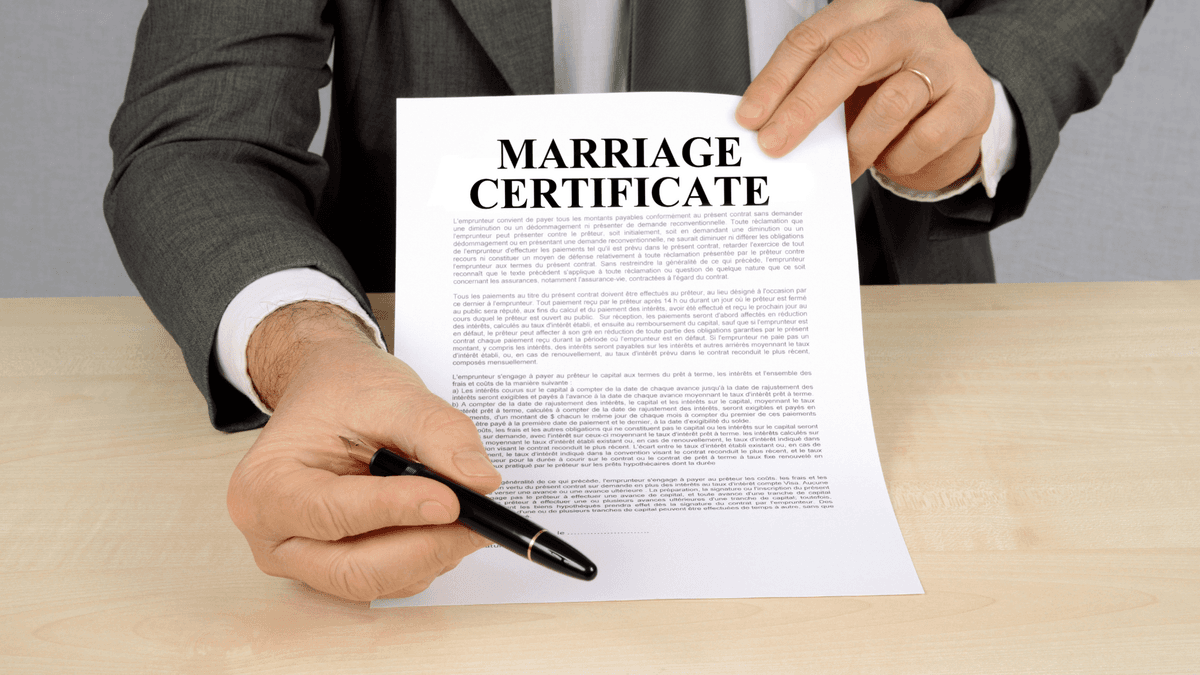
Apostille for Marriage Certificates
An Indian marriage certificate may need apostille for use in a foreign country where the Convention applies.
The certificate may first require verification by the relevant marriage registrar or designated state authority.
Apostille for Birth Certificates
A birth certificate may need authentication for family sponsorship, foreign school admission, immigration, or other legal procedures.
The certificate's issuing authority and the destination country's requirements determine the process.
Apostille for Police Clearance Certificates
A police clearance certificate may require apostille or another authentication procedure for overseas immigration or employment.
Applicants should confirm that the certificate is eligible and that it meets the receiving authority's validity requirements.
13. Why Does Apostille Matter for International Business?
Businesses operating across national borders frequently exchange official documents.
A foreign company, bank, government department, or commercial institution may request authenticated company records before accepting them.
Examples include:
- Company incorporation certificates.
- Board resolutions.
- Powers of attorney.
- Commercial agreements.
- Certificates of origin.
- Commercial invoices.
- Business registration records.
- Other eligible public or commercial documents.
Apostille may simplify the authentication of eligible public documents used in another Convention country.
However, the Convention does not automatically cover every private commercial document. Some documents may first need notarization, chamber of commerce authentication, or another form of certification to qualify for the applicable apostille procedure.
Companies should confirm the legal and commercial requirements of the destination country before submitting business records.
14. Does Apostille Remove the Need for Embassy Attestation?
In general, yes, when the Hague Apostille Convention applies between the issuing and receiving countries and the document is covered by the Convention.
The purpose of the Convention is to replace the traditional legalization requirement with a single apostille issued by the competent authority in the country where the document originates.
However, applicants must understand the limits.
An apostille does not remove every requirement imposed by a receiving institution. For example, the institution may still request:
- Certified translation.
- A particular document format.
- Supporting identity records.
- Additional academic verification.
- Professional licensing records.
- A recent police clearance certificate.
- Other documents relevant to the application.
The receiving authority may assess the substance of the document even though its origin has been authenticated.
15. What Is an e-Apostille?
An e-apostille, or electronic apostille, is an apostille issued in digital form.
The Hague Conference's electronic Apostille Programme (e-APP) supports the use of digital technology in issuing and verifying apostilles.
An e-apostille is created and digitally signed using an electronic certificate. It may be issued for an electronic public document or for a paper document that has been converted into an accepted electronic format.
Main Features of an e-Apostille
- Digital issuance.
- Electronic signature.
- Secure digital certificate.
- Easier electronic sharing.
- Potential online verification through an e-register.
- Reduced dependence on physical handling where the process supports digital documents.
Is an e-Apostille as Valid as a Paper Apostille?
Under the Convention framework and the e-APP principles, an apostille should not be rejected simply because it is issued electronically.
An e-apostille is treated as an official apostille when issued by the competent authority according to the applicable rules.
However, applicants should confirm whether the receiving institution can accept and verify the electronic format.
Does India Offer Online Apostille Services?
India has e-Sanad, an MEA initiative for online verification and attestation or apostille of eligible documents.
Its availability depends on the issuing authority and document records integrated into the system.
Applicants should check the current portal instructions to determine whether their specific document can be processed digitally.
16. What Documents Are Not Covered by the Hague Apostille Convention?
The Convention applies to public documents within its scope. It does not apply to every document or every type of legal instrument.
The Convention excludes:
Documents executed by diplomatic or consular agents.
Administrative documents dealing directly with commercial or customs operations.
Certain private documents may also require an additional step before they can qualify for apostille.
For example, a private agreement may not itself be a public document. However, a notarial certificate attached to it may be capable of authentication under the relevant procedure.
Similarly, a commercial invoice or certificate connected with customs operations may follow a different authentication route.
Applicants should check whether the document is covered by the Convention and whether it needs preliminary certification.
17. What Happens If the Destination Country Is Not Covered by the Convention?
If the Hague Apostille Convention does not apply between the issuing country and the destination country, the applicant may need to follow the normal document attestation or legalization procedure.
For Indian documents, this may involve:
Verification by the issuing institution or designated authority.
State-level authentication, where required.
Normal MEA attestation.
Authentication by the destination country's embassy or consulate.
Further authentication by the destination-country foreign ministry, where required.
The exact sequence depends on the destination country and document type.
Is Embassy Attestation the Same as Apostille?
No. Embassy attestation is part of a separate diplomatic legalization procedure.
Apostille is issued under the Hague Apostille Convention by the competent authority in the country where the public document originates.
Normal embassy legalization is generally relevant when the Convention does not apply or the destination authority requires another authentication route.
18. Common Misconceptions About the Hague Apostille Convention
Applicants often misunderstand what an apostille does and when it is required.
Misconception 1: Apostille Confirms That Every Statement Is True
An apostille authenticates the signature, capacity, and seal or stamp associated with a public document. It does not independently verify the entire contents.
Misconception 2: Every Foreign Country Accepts Apostille
Apostille applies only where the Convention is in force between the relevant countries and the document is covered by its scope.
Misconception 3: Every Document Needs Notary Attestation First
Notarization is not a universal requirement. The preliminary verification route depends on the document category.
Misconception 4: Apostille Guarantees Visa Approval
Apostille does not guarantee a visa, employment offer, university admission, or immigration approval.
Misconception 5: Embassy Attestation Is Always Required After Apostille
Generally, further diplomatic legalization should not be required under the Convention when it applies. Additional institutional requirements may still exist.
Misconception 6: Any Agency Can Issue an Apostille
Only the competent authority designated by a participating country can officially issue an apostille. Private service providers may assist with applications but cannot independently issue the official certificate unless they are the designated competent authority.
Misconception 7: A Country's Membership Automatically Means Every Document Is Accepted
The Convention simplifies authentication. The receiving authority may still require specific formats, translations, or supporting records.
19. How to Verify an Apostille Certificate
Verification is important because the apostille must be issued by the competent authority of the country where the document originates.
The Hague Conference does not itself issue apostilles. It also does not act as the authority for verifying individual certificates.
Steps to Check an Apostille
Identify the country that issued the apostille.
Identify the competent authority designated by that country.
Check the apostille number and issuing details.
Use the official verification system if one is available.
Contact the competent authority if the verification details are unclear.
Confirm that the apostille is associated with the correct underlying document.
Some countries maintain electronic registers that allow recipients to verify apostilles online.
Applicants should use official verification channels rather than relying only on photographs or informal copies.
20. How to Choose a Reliable Apostille Service Provider in India
A professional apostille service provider can help applicants coordinate the process, especially when university, state, or other preliminary verification is required.
However, applicants should understand the provider's role and avoid assuming that a private agency is the authority issuing the apostille.
Consider the following factors.
Experience With the Document Category
Choose a provider familiar with your certificate type, such as degree certificates, birth certificates, marriage certificates, or commercial documents.
Destination-Country Knowledge
The provider should understand whether the destination country requires apostille or normal attestation.
Transparent Pricing
Request a written quotation that separates government charges, preliminary verification, service fees, translation, and courier costs.
Original Document Security
Ask how original certificates are collected, stored, transported, and returned.
Application Updates
Check whether the provider offers application tracking or regular progress updates.
Clear Processing Estimates
Ask for stage-by-stage timelines rather than accepting an unsupported promise of instant apostille.
No Guaranteed Acceptance Claims
A service provider cannot guarantee that a foreign authority will approve a visa, employment application, or university admission simply because a document has been apostilled.
Frequently Asked Questions About the Hague Apostille Convention
1. What is the Hague Apostille Convention?
The Hague Apostille Convention is an international treaty signed on 5 October 1961 that simplifies the authentication of public documents used abroad. It replaces traditional diplomatic or consular legalization with a standardized apostille certificate when the Convention applies between the relevant countries.
2. Why is the Hague Apostille Convention important?
It reduces the number of authentication stages required for eligible public documents used between participating countries. This helps individuals, businesses, educational institutions, and government authorities manage international documentation more efficiently.
3. Is India a member of the Hague Apostille Convention?
Yes. India became a party to the Convention in 2005. The Ministry of External Affairs is India's designated competent authority for issuing apostilles.
4. What is an apostille certificate?
An apostille is an official certificate that authenticates the signature, capacity of the signer, and seal or stamp associated with a public document. It is used for eligible documents in countries where the Convention applies.
5. Which Indian documents can be apostilled?
Common examples include degree certificates, diplomas, birth certificates, marriage certificates, death certificates, affidavits, powers of attorney, and other eligible public documents. The applicable verification requirements depend on the document.
6. Which countries accept Indian apostille certificates?
Countries where the Hague Apostille Convention is in force between India and the destination country generally accept eligible Indian apostilles. Applicants should check the current HCCH status table for entry-into-force dates and any applicable objections or declarations.
7. Is apostille the same as embassy attestation?
No. Apostille is issued under the Hague Apostille Convention by the designated competent authority in the country of origin. Embassy attestation is a separate diplomatic authentication process generally used when apostille does not apply or is not accepted.
8. Does apostille remove the need for embassy attestation?
Generally, yes, when the Convention applies between the countries concerned. An apostille should replace further diplomatic legalization. The receiving institution may still require translation, supporting documents, or other application formalities.
9. Does an apostille verify the contents of a certificate?
No. It verifies the signature, capacity, and seal or stamp associated with the public document. It does not independently establish the truth of every statement in the certificate.
10. Can educational certificates be apostilled in India?
Yes. Eligible educational certificates can be apostilled after completing the required verification by the issuing university, educational board, or designated authority.
11. Can birth and marriage certificates be apostilled?
Yes. Eligible birth and marriage certificates can be apostilled for use in Convention countries after following the required verification procedure.
12. Can a police clearance certificate be apostilled?
An eligible police clearance certificate may be apostilled for overseas immigration or employment. The issuing authority and destination-country requirements determine the applicable process.
13. Is notary attestation compulsory before apostille?
No. Notarization is not compulsory for every document. The applicable preliminary verification depends on the document category and the relevant authentication rules.
14. What is the difference between apostille and MEA attestation?
MEA provides both apostille and normal attestation. Apostille is used for eligible documents intended for countries where the Convention applies, while normal MEA attestation is used for countries or situations where apostille is not applicable or accepted.
15. What is an e-apostille?
An e-apostille is an official apostille issued in electronic form and digitally signed by the competent authority. It can be verified through the applicable electronic verification system where available.
16. Can commercial documents receive an apostille?
Some eligible commercial and business-related documents may be apostilled. However, certain commercial or customs-related administrative documents fall outside the Convention's scope, and additional certification may be necessary.
17. How much does an apostille cost in India?
The total cost depends on government charges, preliminary verification, document type, service-provider fees, and delivery arrangements. Check the current official MEA charges and request a complete quotation for additional services.
18. How long does an apostille take in India?
Processing time depends on the document, issuing authority, preliminary verification, and applicable MEA submission process. University or state verification can add time to the overall process.
19. Can I get an apostille while living outside India?
You may be able to arrange the process through an authorized representative or service provider, subject to the submission rules for your document. Some procedures may require original documents or specific authorization.
20. Does apostille guarantee acceptance by a foreign university or employer?
No. Apostille authenticates the origin of an eligible public document. The receiving university, employer, government department, or immigration authority decides whether the document meets its substantive requirements.
Why the Hague x Convention Matters for Indian Applicants?
The Hague Apostille Convention has made international document authentication simpler by replacing many traditional diplomatic legalization procedures with a standardized apostille certificate.
For Indian applicants, it is particularly relevant when educational, personal, legal, and eligible commercial documents need to be submitted abroad. Students can use it when preparing academic certificates for foreign universities. Professionals may need it for overseas employment. Families may require apostilled birth and marriage certificates for immigration. Businesses may use it to authenticate eligible documents for international transactions.
India's participation in the Convention since 2005 allows the Ministry of External Affairs to issue apostilles for eligible Indian public documents intended for use in other countries where the Convention applies.
However, applicants should remember that apostille is not a universal authentication method for every destination. The Convention must apply between the country where the document was issued and the country where it will be used. The document must also fall within the Convention's scope and satisfy the relevant preliminary verification requirements.
Before starting the process, check the current HCCH status table, identify the receiving authority's instructions, and confirm whether apostille or normal embassy legalization is required.
A clear understanding of the Hague Apostille Convention can help you avoid unnecessary authentication stages, prepare your documents correctly, and manage international paperwork with greater confidence.



- All
- Apostille
- Attestation
- Australia Apostille
- Austria Apostille
- Bahrain Attestation
- China Attestation
- Egypt Attestation
- Embassy
- France Apostille
- Germany Apostille
- HRD
- Italy Apostille
- Kuwait Attestation
- Lithuania Apostille
- MEA
- Malaysia Attestation
- Mexico Apostille
- Netherlands Apostille
- Nigeria Attestation
- Oman Apostille
- PCC
- Philippines Attestation
- Qatar Attestation
- Saudi Arabia Attestation
- Taiwan Attestation
- Translation
- UAE Attestation
- UK Apostille
- USA Apostille
- Vietnam Attestation
- Visa
- Visa Stamping