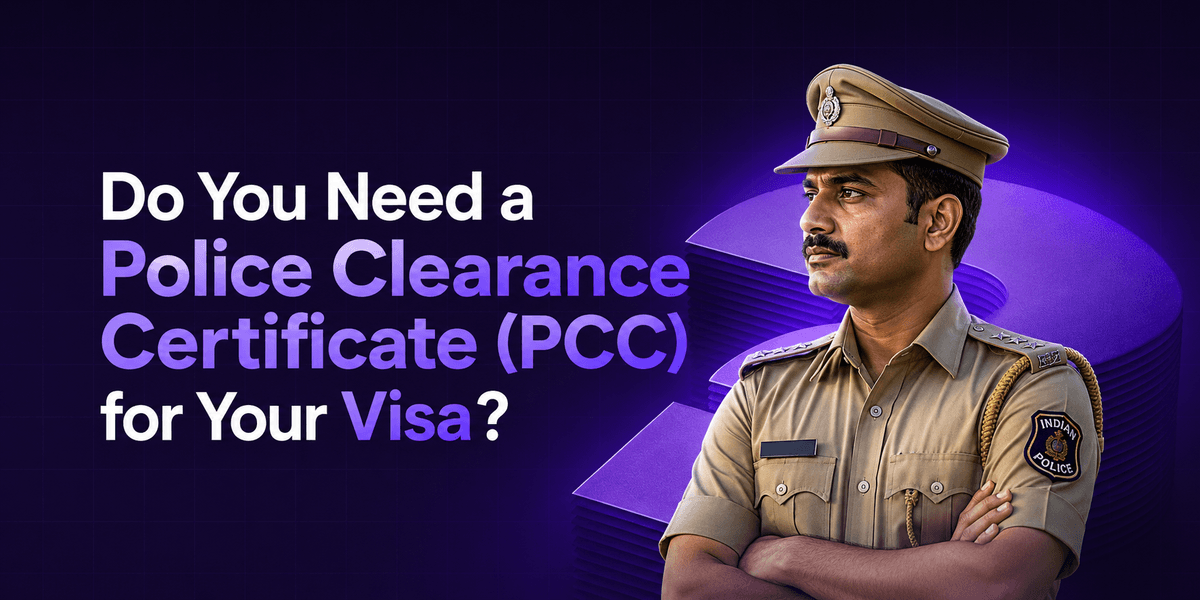
Do You Need a Police Clearance Certificate (PCC) for Your Visa?
If you are planning to travel abroad for employment, higher education, immigration, permanent residency, family sponsorship, or long-term stay, you may have come across a document called a Police Clearance Certificate (PCC). One of the most common questions asked by visa applicants is: Do you need a Police Clearance Certificate (PCC) for your visa?
The simple answer is that many countries require a PCC as part of their visa and immigration process. However, the exact requirement depends on the destination country, type of visa, duration of stay, and the applicant's personal circumstances. Understanding the purpose, importance, and application process of a Police Clearance Certificate can help you avoid delays and improve the chances of a smooth visa approval process.
A Police Clearance Certificate is an official document issued by a police department or authorized government authority certifying that an individual has no criminal record or adverse police history during a specified period of residence. The certificate serves as evidence of good conduct and is often used by immigration authorities, employers, educational institutions, embassies, and government agencies to assess the background of applicants.
As international travel, overseas employment, global education, and immigration opportunities continue to increase, the demand for Police Clearance Certificates has grown significantly. Countries worldwide place great importance on security and public safety. Before granting long-term visas, work permits, permanent residency, or citizenship, governments often require applicants to provide proof of a clean criminal background.
The primary purpose of a PCC is to verify that an individual does not pose a security risk to the destination country. Immigration authorities use the certificate to determine whether the applicant has been involved in criminal activities, legal violations, or offenses that could affect visa eligibility.
Many applicants are surprised to learn that a Police Clearance Certificate is not only required for immigration purposes but also for employment, education, professional licensing, and family visa applications. The certificate has become an important component of international documentation and identity verification procedures.
Countries such as Canada, Australia, New Zealand, the United Kingdom, the United States, Germany, France, Singapore, Ireland, Portugal, and several Gulf countries frequently request PCC documents during immigration or visa processing. Whether you are applying for a skilled migration visa, work permit, student visa, spouse visa, or permanent residency program, a PCC may be required at some stage of the application process.
One of the most common situations where a PCC is mandatory is overseas employment. Employers investing in international recruitment often want assurance regarding the character and background of potential employees. A Police Clearance Certificate helps employers verify that candidates have no significant criminal history and can be trusted in professional environments.
Industries such as healthcare, aviation, education, information technology, banking, hospitality, security services, engineering, and government contracting frequently require background verification through PCC documentation. Many multinational companies make PCC submission a mandatory requirement before finalizing employment contracts.
Healthcare professionals such as doctors, nurses, pharmacists, physiotherapists, laboratory technicians, and healthcare administrators often require PCC verification when applying for jobs abroad. Regulatory bodies and healthcare institutions prioritize patient safety and therefore conduct extensive background checks before granting professional licenses or employment approvals.
Teachers and education professionals are another group commonly required to provide PCC documentation. Schools, colleges, universities, and educational institutions frequently request police clearance certificates before hiring international faculty members. Since teachers interact closely with students, educational authorities place significant emphasis on background verification.
Engineering professionals, project managers, consultants, accountants, and corporate executives relocating internationally may also be required to submit PCC documents during employment and work permit applications. Employers use these certificates to support recruitment decisions and comply with local regulatory requirements.
Students planning to study abroad may also encounter PCC requirements. While not all universities require police clearance certificates, certain countries and educational programs request them during admissions or visa applications. Students pursuing long-term educational programs, internships, research positions, or exchange programs may need to submit PCC documentation as part of immigration compliance procedures.
Immigration and permanent residency programs are among the most common reasons for obtaining a Police Clearance Certificate. Countries offering skilled migration pathways typically conduct comprehensive background assessments before approving residency applications. Immigration authorities use PCC documents to evaluate the applicant's criminal record status and determine admissibility.
For example, applicants seeking permanent residency in Canada, Australia, New Zealand, or European countries are often required to submit police clearance certificates from all countries where they have lived for a specified period. These certificates help immigration officials assess whether applicants meet security and character requirements.
Family sponsorship and spouse visa applications may also require PCC verification. Many countries request police clearance certificates from both sponsors and applicants to ensure compliance with immigration regulations and security standards. The requirement is especially common for long-term residence permits, family reunification programs, and dependent visas.
Business visas and investor immigration programs may involve PCC requirements as well. Entrepreneurs, investors, and business owners applying for residency or investment visas often undergo background verification as part of due diligence procedures. Police clearance certificates help establish credibility and support regulatory compliance.
Many people mistakenly assume that a PCC is required only once in a lifetime. In reality, police clearance certificates often have limited validity periods. Depending on the destination country's regulations, a PCC may be considered valid for three months, six months, or one year from the date of issue. If the certificate expires before visa processing is completed, applicants may need to obtain a new PCC.
Understanding PCC validity is crucial because submitting an expired certificate can delay application processing or result in document rejection. Visa applicants should verify validity requirements before submitting documentation to embassies, immigration authorities, or employers.
A common question asked by applicants is whether a PCC issued in one country can be used globally. The answer depends on the destination country's requirements and the issuing authority. Some countries require country-specific police clearance certificates, especially if the applicant has lived in multiple jurisdictions. Immigration authorities often request PCCs from every country where the applicant has resided for a specified duration.
For example, if an individual lived in India, the UAE, and Singapore over the past several years, a destination country may request separate police clearance certificates from each jurisdiction. This helps immigration officials conduct a comprehensive background assessment.
In India, Police Clearance Certificates are generally issued by the Passport Office, Passport Seva Kendra, Regional Passport Office, or local police authorities depending on the purpose and applicant's circumstances. The application process may involve identity verification, address verification, and police background checks.
Applicants usually need to provide documents such as a valid passport, proof of address, photographs, identity documents, and application forms. Additional documentation may be required depending on the issuing authority and purpose of the PCC.
Police verification is an important component of the PCC issuance process. Authorities may conduct address verification, review criminal records, and assess law enforcement databases before issuing the certificate. Successful completion of verification procedures results in the issuance of a Police Clearance Certificate confirming the applicant's clean background status.
Another important aspect of PCC documentation is authentication. Many countries require PCC Attestation or PCC Apostille before accepting the certificate for visa and immigration purposes. Authentication ensures that the certificate is genuine and legally recognized by foreign authorities.
PCC Attestation is typically required for countries that are not members of the Hague Apostille Convention. Gulf countries such as the UAE, Saudi Arabia, Qatar, Kuwait, Bahrain, and Oman commonly require attested police clearance certificates.
The PCC attestation process usually involves verification by relevant authorities, authentication by the Ministry of External Affairs (MEA), and legalization by the embassy of the destination country. Embassy attestation confirms that the document is legally acceptable within the destination country's jurisdiction.
PCC Apostille is required for countries that are members of the Hague Convention. Countries such as Germany, France, Italy, Spain, Portugal, the Netherlands, Australia, New Zealand, and Singapore generally accept apostilled police clearance certificates.
The Apostille certificate verifies the authenticity of the PCC and eliminates the need for embassy legalization among participating countries. This simplifies the authentication process and facilitates international document recognition.
Many visa applicants delay obtaining their PCC until the final stages of application processing. This can create significant challenges because police verification and document authentication procedures may require additional time. Starting the PCC process early helps avoid unnecessary delays and ensures that certificates remain valid throughout the visa application journey.
Applicants should also ensure that personal information on the PCC matches passport details exactly. Discrepancies in names, dates of birth, passport numbers, or addresses can lead to verification issues and application complications. Reviewing all details carefully before submission is highly recommended.
The importance of a PCC extends beyond immigration and employment. Professional licensing bodies, government agencies, educational institutions, volunteer organizations, and international associations often require police clearance documentation. Background verification has become a standard practice across many sectors and jurisdictions worldwide.
In today's increasingly interconnected world, trust and transparency play a critical role in international mobility. Governments and organizations seek assurance that individuals entering their jurisdictions meet legal, ethical, and security standards. The Police Clearance Certificate serves as an important tool in achieving these objectives.
Many applicants feel anxious about the PCC process, particularly if they are unfamiliar with documentation requirements. Working with experienced document verification and attestation professionals can simplify the process significantly. Professional guidance helps applicants understand requirements, prepare documentation correctly, and complete authentication procedures efficiently.
As global migration, education, and employment opportunities continue to expand, Police Clearance Certificates will remain an essential component of international documentation. Whether you are planning to work abroad, study overseas, immigrate permanently, sponsor family members, or establish international business interests, understanding PCC requirements is vital.
Before submitting any visa application, it is important to verify whether your destination country requires a Police Clearance Certificate. Failing to provide the required PCC can result in delays, additional document requests, or even application rejection. Proactive preparation helps ensure a smoother application experience and reduces administrative complications.
The answer to the question, "Do you need a Police Clearance Certificate (PCC) for your visa?", depends on your destination country and visa category. However, for many international travel, employment, immigration, and residency applications, the answer is yes. A properly issued and authenticated PCC demonstrates good character, supports compliance with immigration regulations, and strengthens your application.
By obtaining your Police Clearance Certificate early, verifying authentication requirements, and ensuring document accuracy, you can confidently move forward with your international plans. Whether your goal is higher education, career advancement, family reunification, immigration, or business expansion, a PCC may be one of the most important documents supporting your journey toward global opportunities.

- All
- Apostille
- Attestation
- Australia Apostille
- Austria Apostille
- Bahrain Attestation
- China Attestation
- Egypt Attestation
- Embassy
- France Apostille
- Germany Apostille
- HRD
- Italy Apostille
- Kuwait Attestation
- Lithuania Apostille
- MEA
- Malaysia Attestation
- Mexico Apostille
- Netherlands Apostille
- Nigeria Attestation
- Oman Apostille
- PCC
- Philippines Attestation
- Qatar Attestation
- Saudi Arabia Attestation
- Taiwan Attestation
- Translation
- UAE Attestation
- UK Apostille
- USA Apostille
- Vietnam Attestation
- Visa
- Visa Stamping