Apostille Processing Time in Bangalore | MEA Timeline & Guide
Planning to study abroad, accept an international job offer, apply for a visa, or relocate to another country? If your documents were issued in India, you may need to complete an apostille process before submitting them to a foreign university, employer, government department, immigration authority, or other official institution.
One of the most common questions applicants ask is: How long does apostille take in Bangalore?
The answer depends on several factors, including the type of document, issuing authority, preliminary authentication requirements, MEA processing, submission method, and document collection arrangements.
According to the Ministry of External Affairs (MEA) Citizen's Charter, apostille processing is usually completed within seven working days after the document is received in MEA. However, this is not necessarily the total time required from the day an applicant starts preparing the documents. Preliminary authentication, university or state-level verification, submission, transportation, and delivery may require additional time.
For applicants in Bangalore, understanding this distinction is important when planning university admissions, overseas employment, visa appointments, family relocation, or legal documentation.
Whether you need a birth certificate apostille, marriage certificate apostille, degree certificate apostille, diploma apostille, affidavit apostille, or power of attorney apostille, this guide explains the processing timeline, step-by-step procedure, common delays, government charges, and practical ways to prepare your documents correctly.
How Long Does Apostille Take in Bangalore?
The Ministry of External Affairs states that apostille processing is usually completed within seven working days after receiving the document in MEA.
However, the complete apostille process in Bangalore may take longer because applicants may first need to complete preliminary authentication through the relevant State or Union Territory authority.
The total time can depend on:
- Type of document submitted.
- State or authority that issued the document.
- Preliminary authentication requirements.
- University or board verification, where applicable.
- Availability of e-Sanad online verification.
- Document submission and collection arrangements.
- MEA processing.
- Additional verification or correction requirements.
Important: Seven working days is the MEA's usual processing timeline after receipt, not a guaranteed end-to-end turnaround time for every application.
For example, an educational certificate may require verification by the issuing university or designated Education Department before it reaches MEA. A personal document may require preliminary authentication by the relevant Home Department or General Administration Department.
Applicants should therefore plan for the complete authentication process rather than relying only on the MEA processing period.
Understanding the Apostille Process Before Estimating Processing Time
An apostille is an official authentication certificate issued by the competent authority of a country that participates in the Hague Apostille Convention.
India has been a member of the Apostille Convention since 2005. The Ministry of External Affairs is the competent authority responsible for issuing apostilles for eligible Indian public documents.
An apostille verifies:
- The authenticity of the signature appearing on the public document.
- The official capacity in which the person signing the document acted.
- The identity of the seal or stamp appearing on the document, where applicable.
It does not verify the factual contents of the document or guarantee that a foreign university, employer, or government department will approve an application.
The apostille process generally involves two important stages:
Stage 1: Preliminary authentication
The document is authenticated by the designated authority of the State or Union Territory from which it was issued, unless an eligible alternative verification route applies.
Stage 2: MEA apostille
The document is submitted through the applicable authorised channel for apostille by the Ministry of External Affairs.
The time required for both stages determines the applicant's overall experience.
Why Does Apostille Processing Time Vary in Bangalore?
Not all documents follow the same authentication procedure. Some may be easier to verify, while others require additional checks.
The following factors can influence apostille processing time in Bangalore.
1. Type of Document
The document category is one of the most important factors affecting the timeline.
Common documents submitted for apostille include:
- Birth certificates.
- Marriage certificates.
- Death certificates.
- Affidavits.
- Powers of attorney.
- Degree certificates.
- Diploma certificates.
- School certificates.
- Academic transcripts.
- Other eligible public documents.
Personal and educational documents generally follow different preliminary authentication routes.
For example, personal documents may require authentication by the designated Home Department or General Administration Department. Educational documents generally require authentication by the designated Education Department.
The requirements may also vary according to the issuing authority and document format.
2. Preliminary Authentication Requirements
Preliminary authentication is a significant part of the Indian apostille process.
Before MEA can issue an apostille for documents outside the applicable e-Sanad route, the document must undergo the prescribed verification by the designated State or Union Territory authority.
For personal documents, the designated authority is generally the Home Department or General Administration Department.
For educational documents, the designated authority is generally the Education Department.
The time required at this stage depends on the relevant authority's verification procedure, document availability, and any additional checks.
Applicants should not assume that the MEA's seven-working-day timeline includes this preliminary stage.
3. Issuing Authority of the Document
The authority that originally issued the document can affect the authentication procedure.
For example:
- A birth certificate may be issued by a municipal or civil registration authority.
- A marriage certificate may be issued by a marriage registration authority.
- A degree certificate may be issued by a university.
- A diploma may be issued by a technical institution or educational board.
- An affidavit may be executed before a notary or another authorised person.
The designated authority must be able to authenticate the relevant signature or seal.
If the document's origin cannot be verified through the prescribed process, additional clarification or verification may be necessary.
4. State or Union Territory Where the Document Was Issued
The issuing state is important because preliminary authentication is generally connected to the State or Union Territory from which the document originated.
For example, an individual living in Bangalore may hold a degree certificate issued by a university in another state.
The applicant's current residence does not automatically change the preliminary authentication jurisdiction.
Similarly, a personal document issued in another state may need to follow that state's authentication procedure.
Applicants should confirm the applicable route before submitting original documents in Bangalore.
5. e-Sanad Eligibility
The Government of India's e-Sanad system provides an online route for verification and attestation or apostille of eligible documents.
However, not all documents can be processed through e-Sanad.
Online processing depends on factors such as:
- Whether the issuing authority is integrated with the system.
- Whether the document is available in the relevant digital repository.
- Whether the document type is supported.
- Whether the required verification can be completed electronically.
- Whether the applicant satisfies the current portal requirements.
Where electronic verification is available, the process may be more convenient because eligible documents can be submitted and tracked online.
If a document is not eligible for e-Sanad, the applicable offline authentication route may be necessary.
6. Document Accuracy and Completeness
Incomplete or incorrect documents can cause avoidable delays.
Common problems include:
- Spelling differences in names.
- Incorrect dates of birth.
- Missing official seals.
- Unclear signatures.
- Damaged certificates.
- Incomplete supporting documents.
- Incorrect document formats.
- Missing preliminary authentication.
Before starting the apostille process, carefully review the document and resolve any discrepancies with the issuing authority.
7. Submission and Collection Arrangements
Documents outside the e-Sanad route are submitted through the applicable authorised outsourced service provider.
Document collection, scanning, submission, transportation, and delivery arrangements may add time to the overall process.
Applicants should confirm the current submission procedure and collection arrangements before handing over original documents.
Apostille Processing Time for Different Documents in Bangalore
The processing requirements vary depending on the document category. Understanding these differences can help applicants plan more realistically.
1. Birth Certificate Apostille Processing Time
A birth certificate is commonly required for overseas immigration, dependent visas, family reunification, education, and other legal or administrative procedures.
The processing timeline depends on:
- The issuing municipal or civil registration authority.
- Availability of the original certificate.
- Preliminary authentication requirements.
- Verification of the issuing authority's signature or seal.
- MEA processing.
- Collection and delivery arrangements.
If the certificate contains errors or the issuing authority requires additional verification, the process may take longer.
Applicants should also confirm whether the destination country requires a recently issued birth certificate or a particular certificate format.
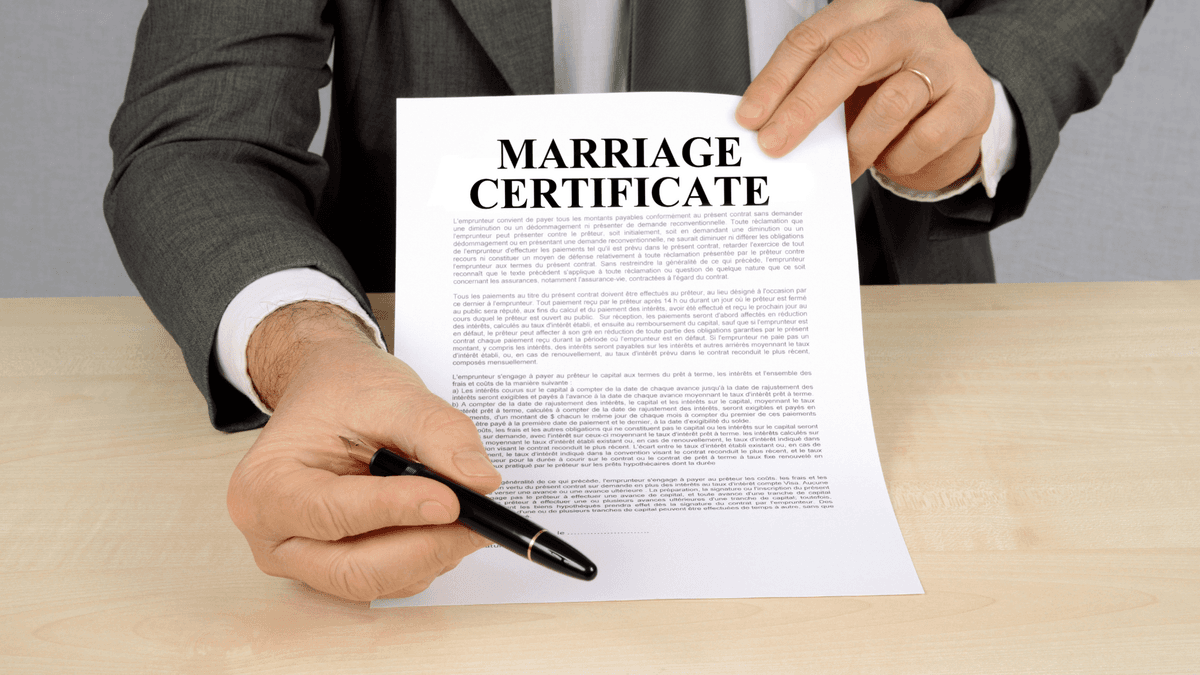
2. Marriage Certificate Apostille Processing Time
Marriage certificate apostille is often required for spouse visas, dependent visas, overseas residence, family registration, and other international procedures.
The timeline depends on the issuing marriage registration authority and the applicable preliminary authentication process.
Before submission, check:
- Whether the certificate is issued by the appropriate registration authority.
- Whether the names of both spouses are correct.
- Whether the certificate contains the required official details.
- Whether the receiving authority requires a particular format.
- Whether translation is necessary.
Differences in names or personal details may need to be resolved before authentication.
3. Degree Certificate Apostille Processing Time
Degree certificate apostille is commonly required for overseas employment, university admission, professional registration, and qualification verification.
Educational certificates generally require preliminary authentication by the designated Education Department, unless an applicable digital verification route is available.
Depending on the issuing institution, university verification may also be required.
The timeline may be influenced by:
- University verification procedures.
- Certificate issuance records.
- Availability of digital verification.
- State-level authentication.
- MEA processing.
- Document collection arrangements.
Applicants should check whether the receiving institution requires only the degree certificate or also academic transcripts and marks cards.
4. Diploma Certificate Apostille Processing Time
Diploma certificates may be required for technical employment, vocational training, higher education, and professional applications abroad.
The authentication route depends on the institution that issued the diploma.
Some documents may require verification from the issuing board or institution before preliminary authentication can be completed.
Applicants should confirm the document's eligibility and the required verification procedure before submitting it.
5. Affidavit Apostille Processing Time
Affidavits are used for a variety of personal, family, legal, and administrative purposes.
Examples include:
- Single-status declarations.
- Name-change declarations.
- Relationship declarations.
- Consent affidavits.
- Address-related declarations.
- Other statements requested by foreign authorities.
The affidavit must be correctly prepared and executed according to the applicable requirements.
Notarization, where required, is not the same as preliminary authentication or apostille.
An affidavit may require additional verification depending on how it was executed and the purpose for which it will be used.
6. Power of Attorney Apostille Processing Time
A power of attorney may be required when a person living overseas authorises another individual to act on their behalf.
It may be used for property, legal, financial, or administrative matters.
The processing timeline depends on the document's preparation, signing formalities, applicable notarization or authentication requirements, and MEA processing.
Applicants should obtain appropriate legal guidance before executing a power of attorney for important transactions.
7. Death Certificate Apostille Processing Time
Death certificates may be required for overseas inheritance, insurance, succession, pension, banking, or family-related matters.
The document must meet the applicable authentication requirements of the issuing authority and the destination country.
If the certificate needs correction or additional verification, the overall process may take longer.
MEA Apostille Processing Time: What Does Seven Working Days Actually Mean?
One of the most important details applicants should understand is the distinction between MEA processing time and total apostille turnaround time.
The Ministry of External Affairs' Citizen's Charter states that apostille processing is usually completed within seven working days after receiving the document in MEA.
This means the stated period begins after the document reaches the relevant MEA processing stage.
It does not necessarily include:
- Obtaining a birth or marriage certificate.
- University or board verification.
- Preliminary authentication by the designated state authority.
- Document preparation.
- Submission to an authorised outsourced service provider.
- Transportation to the relevant processing office.
- Collection and delivery after processing.
- Translation or other supporting formalities.
For example, an applicant may begin preparing a degree certificate for overseas employment several days or weeks before the document is submitted to MEA.
The MEA's seven-working-day period does not account for all those earlier steps.
Therefore, when asking how long apostille takes in Bangalore, it is important to understand which stage of the process is being discussed.
Step-by-Step Apostille Process in Bangalore
Understanding the complete process can help applicants avoid unnecessary delays.
Step 1: Confirm the Destination Country
Before submitting your documents, identify the country where they will be used.
Check whether:
- The destination country recognises the Hague Apostille Convention.
- The Convention applies between India and the destination country.
- The receiving authority accepts apostille.
- The document type is acceptable.
- A translation or additional authentication is required.
If apostille is not accepted, normal attestation and potentially further embassy or consular legalization may be required.
Step 2: Identify the Correct Document Category
Determine whether your document is personal, educational, or commercial.
This matters because different document categories follow different preliminary authentication routes.
Examples:
Identify the Correct Document Category
| Document Category | Common Documents |
|---|---|
| Personal | Birth certificate, marriage certificate, death certificate, affidavit, power of attorney |
| Educational | Degree, diploma, matriculation, secondary certificate |
| Commercial | Business documents, company records and other eligible commercial documents |
The document's issuing authority and intended use should also be considered.
Step 3: Check Document Accuracy
Review all important information, including:
Applicant's name.
Date of birth.
Certificate number.
Issuing authority.
Official signature.
Seal or stamp.
Date of issue.
If there are discrepancies, contact the issuing authority before starting the authentication process.
Step 4: Complete Preliminary Authentication
The relevant designated State or Union Territory authority authenticates the document before MEA apostille, unless the document qualifies for an applicable alternative route.
Generally:
- Personal documents require authentication by the designated Home Department or General Administration Department.
- Educational documents require authentication by the designated Education Department.
- Commercial documents require preliminary authentication by the respective Chamber of Commerce.
For documents issued in Karnataka, applicants should confirm the current state-level procedure and competent authority.
Step 5: Check e-Sanad Eligibility
If the document is supported by the e-Sanad system, applicants may be able to use the online process.
Check the issuing authority's digital integration and the current document eligibility requirements.
If online verification is unavailable, proceed through the applicable offline route.
Step 6: Submit Through the Authorised Channel
Documents outside e-Sanad are submitted through the designated authorised outsourced service provider.
Applicants should confirm the latest submission requirements, supporting documents, service charges, and collection procedure.
Do not rely on unauthorised intermediaries.
Step 7: MEA Apostille Processing
After the applicable authentication and submission requirements are completed, the document is processed for apostille by the competent authority.
The apostille confirms the origin of the public document by authenticating the relevant signature or seal and official capacity.
The MEA's published usual processing period is seven working days after receipt.
Step 8: Collect and Verify the Document
Once processing is complete, inspect the document carefully.
Check:
- The original document is returned.
- The apostille certificate or sticker is present.
- The apostille details are readable.
- The document and apostille are properly attached.
- The personal details are correct.
- No pages or supporting documents are missing.
Keep a scanned copy for your records.
How Do Holidays and Weekends Affect Apostille Processing Time?
Working days and calendar days are not the same.
The MEA's stated timeline is expressed in working days. Weekends and applicable public holidays should therefore be considered when estimating the overall period.
For example, an application submitted close to a public holiday may experience a longer calendar-day turnaround even when the official working-day processing period remains unchanged.
Other stages, such as preliminary authentication, document transportation, and collection, may also follow separate working schedules.
Applicants should avoid calculating their final document delivery date by simply adding seven calendar days to the submission date.
Instead, confirm the current working schedule and allow a reasonable buffer before an important overseas deadline.
Does e-Sanad Reduce Apostille Processing Time?
e-Sanad is the Government of India's online system for verification and attestation or apostille of eligible documents.
It can make the process more convenient by allowing applicants to submit eligible documents electronically and check application status online.
The system may help reduce certain physical submission and coordination steps.
However, e-Sanad does not automatically make every document eligible for online apostille.
Eligibility depends on whether the issuing authority and document are supported by the system's digital verification arrangements.
Applicants should check:
- Whether the document is available in the relevant digital repository.
- Whether the issuing institution is integrated.
- Whether the document category is supported.
- Whether electronic verification can be completed.
- Whether any additional requirements apply.
If the document cannot be processed through e-Sanad, the applicable offline procedure remains relevant.
Online submission should not be confused with automatic approval.
Common Reasons for Apostille Processing Delays in Bangalore
Apostille delays can happen for several reasons. Some are related to the document itself, while others depend on the authentication and submission process.
1. Incomplete Preliminary Authentication
If the document has not completed the required state-level authentication, it may not be ready for MEA submission.
This can delay the overall process.
2. University or Board Verification Delays
Educational documents may require verification from the issuing university or board.
If academic records are difficult to locate or additional confirmation is required, the process may take longer.
3. Incorrect Personal Details
Differences in names, dates, or other information can create authentication and acceptance issues.
For example, the name on a degree certificate may differ from the applicant's passport.
Such discrepancies should be addressed before submission.
4. Unclear or Damaged Documents
Documents with unclear seals, signatures, damaged pages, or illegible information may require additional verification.
Submit documents in an acceptable condition and avoid unnecessary lamination or alterations.
5. Incorrect Document Type
Applicants may submit a photocopy, provisional certificate, or unofficial academic record when the receiving authority requires a different document.
Always confirm the exact document format.
6. Wrong Authentication Route
Apostille and normal attestation are not interchangeable.
If the destination country does not accept apostille, applicants may need to follow the normal attestation and consular legalization process instead.
Choosing the wrong route can result in wasted time and additional expenses.
7. Incorrect Assumptions About e-Sanad
Not all documents are available for online processing.
Submitting an ineligible document through an unsuitable route may lead to additional steps.
8. Delayed Document Collection or Delivery
Even after MEA processing is complete, collection and delivery arrangements may take additional time.
Applicants should confirm how the completed document will be returned.
9. Last-Minute Applications
Starting the process shortly before a university deadline, visa appointment, or overseas travel date leaves little room for additional verification.
Planning ahead is one of the most effective ways to reduce deadline-related problems.
How to Avoid Delays in Apostille Processing
Although applicants cannot control every stage of government processing, they can take practical steps to reduce avoidable delays.
Prepare the Correct Documents
Check the official requirements of the receiving authority before submitting documents.
Do not assume that every application requires the same certificates.
Verify the Issuing Authority
Confirm that the document was issued by the appropriate university, board, municipal authority, or other recognised body.
Resolve Errors Before Submission
Correct spelling mistakes, date discrepancies, and other document errors through the issuing authority.
Complete Preliminary Authentication
Identify the correct state-level authentication procedure and complete it before MEA submission, where required.
Check Online Eligibility
Use e-Sanad only if your document and issuing authority meet the current eligibility requirements.
Keep Supporting Documents Ready
Prepare passport copies, document copies, application details, and any additional supporting records requested.
Start Early
If your document is needed for overseas education, employment, immigration, or legal matters, begin the process well before the final submission date.
Use the Authorised Submission Channel
Verify the current authorised service provider and submission procedure.
Maintain Clear Communication
If using a professional apostille assistance provider, ask for updates at each relevant stage and retain document submission acknowledgements.
Apostille Processing Time for Study Abroad
Students planning to study overseas often have strict application and enrolment deadlines.
Depending on the university and destination country, they may be asked to submit:
- Degree certificates.
- Diploma certificates.
- Class 10 and Class 12 certificates.
- Academic transcripts.
- Semester-wise marks cards.
- Other supporting educational records.
The apostille timeline depends on the issuing institution, preliminary authentication, and MEA processing.
Some universities may request apostille, while others may require direct verification, certified copies, or independent credential evaluation.
Students should review the admission checklist carefully before authenticating their academic documents.
Do not apostille every available certificate without checking which records the receiving institution actually requires.
Apostille Processing Time for Overseas Employment
Professionals accepting jobs abroad may need authenticated academic or personal documents before completing their employment or work visa formalities.
Common documents include:
- Degree certificates.
- Diploma certificates.
- Educational transcripts.
- Birth certificates.
- Marriage certificates.
- Affidavits.
- Other documents requested by the employer or relevant authority.
The processing time depends on the authentication route for each document.
If several documents belong to different categories, they may require different preliminary authentication procedures.
Applicants should prepare a document checklist based on the employer's instructions and confirm the correct authentication route for each certificate.
An apostille does not replace professional licensing, work permit approval, experience verification, or immigration requirements.
Apostille Processing Time for Immigration and Family Applications
Immigration applications may require several personal documents to establish identity, family relationships, marital status, or other personal information.
Examples include:
- Birth certificates.
- Marriage certificates.
- Death certificates.
- Affidavits.
- Powers of attorney.
- Other eligible personal public documents.
If several documents are submitted, each may require separate authentication and apostille.
Applicants should also check whether the receiving authority requires translations, recently issued certificates, or additional supporting documents.
Starting early is particularly important when multiple family members need document authentication.
Apostille vs Embassy Attestation: Which Process Takes Longer?
Apostille and normal attestation follow different authentication frameworks.
Apostille is generally used for eligible public documents intended for countries where the Hague Apostille Convention applies.
Normal attestation is generally used for countries where apostille is not accepted.
Apostille vs Embassy Attestation
| Basis | Apostille | Normal Attestation |
|---|---|---|
| Destination | Applicable Convention countries | Countries where apostille is not accepted |
| Indian authority | MEA | MEA |
| Preliminary authentication | Generally required unless an applicable alternative route applies | Generally required |
| Final process | Apostille certificate | MEA attestation and any further required legalization |
| Embassy or consular step | Generally not required under the Convention framework | May be required |
| Total timeline | Depends on preliminary authentication and MEA processing | Depends on preliminary authentication, MEA and any further embassy or consular steps |
It is not accurate to state that one process is always faster.
Apostille may involve fewer final authentication stages when the Convention applies. However, the total time still depends on the document and preliminary verification requirements.
For normal attestation, additional embassy or consular legalization may be necessary, depending on the destination country.
Applicants should identify the correct route before estimating processing time.
Apostille Charges in Bangalore: Does Faster Processing Cost More?
The official MEA apostille fee and applicable service charges should be distinguished from private professional assistance fees.
The MEA's published apostille fee is ₹50 per apostilled document.
The MEA Citizen's Charter published in July 2026 also lists the following charges:
Apostille Charges
| Charge | Published Amount |
|---|---|
| MEA apostille fee | ₹50 per document |
| Offline outsourced service charge | ₹84 per document |
| Offline scanning charge | ₹3 per page |
| e-Sanad speed post delivery | ₹40 |
These charges should be verified before submission because government fees and service arrangements can change.
Additional expenses may include:
University or board verification.
Preliminary state authentication.
Notarization, where applicable.
Translation.
Courier or delivery.
Duplicate certificate applications.
Professional document assistance.
Be cautious of providers who advertise unusually high charges as mandatory government fees.
Also, do not assume that paying a higher private service fee guarantees faster MEA processing. Any expedited service claim should be clearly explained and supported by the applicable official procedure.
How to Choose a Reliable Apostille Service in Bangalore
If you are unfamiliar with document authentication, a professional apostille service may help you understand the procedure and coordinate the required steps.
However, selecting a reliable provider is important because original educational and personal documents contain valuable information.
Consider the following points.
1. Knowledge of Different Document Categories
A reliable provider should understand the difference between personal, educational, and commercial documents.
Each category may follow a different preliminary authentication route.
2. Clear Explanation of Processing Time
The provider should distinguish between preliminary authentication time, MEA processing time, and collection or delivery time.
Be cautious of guaranteed timelines that do not account for document verification.
3. Transparent Charges
Ask for a written fee breakdown that separates government charges from professional service fees.
4. Secure Document Handling
Confirm how original documents are collected, handled, stored, and returned.
Always obtain a receipt or acknowledgement when submitting important documents.
5. Understanding of e-Sanad
A knowledgeable provider should be able to explain whether your document may qualify for online processing and when an offline route is required.
6. Realistic Communication
Choose a provider that gives clear updates and explains any additional requirements or delays.
7. No False Government Affiliation
A private service provider should not claim to be an MEA office or government authority unless it has a specific official basis for making such a representation.
The official apostille is issued by the competent government authority. Private providers may assist with document preparation and submission through the applicable authorised channel.
FAQ's About Apostille Processing Time in Bangalore
1. How many days does apostille take in Bangalore?
The MEA Citizen's Charter states that apostille processing is usually completed within seven working days after the document is received in MEA. Preliminary authentication, submission, transportation, and delivery may require additional time.
2. Is seven working days the complete apostille processing time?
No. Seven working days refers to the usual MEA processing period after receipt. It does not necessarily include preliminary authentication, university verification, document preparation, or delivery.
3. What is the total time required for apostille in Bangalore?
The total time varies according to the document category, issuing authority, preliminary authentication requirements, e-Sanad eligibility, and submission arrangements. There is no single guaranteed timeline for every document.
4. Does apostille processing include weekends?
The MEA's stated timeline is in working days. Weekends and applicable public holidays should be considered separately when estimating the calendar-day turnaround.
5. Can I get an apostille in Bangalore within one day?
Applicants should not assume that a complete apostille can be obtained in one day. The document may first require preliminary authentication, followed by MEA processing. Always verify the applicable official procedure.
6. Is urgent apostille available in Bangalore?
Applicants should confirm whether any officially recognised expedited arrangement applies to their document and submission route. Do not rely on unofficial promises of guaranteed same-day or next-day MEA apostille.
7. How long does birth certificate apostille take?
The timeline depends on the issuing civil registration authority, preliminary authentication, MEA processing, and delivery. The MEA's usual seven-working-day period applies after receipt in MEA, not necessarily from the date the application is started.
8. How long does marriage certificate apostille take?
Marriage certificate apostille time depends on the issuing authority and applicable preliminary authentication requirements. Additional time may be required if the certificate needs correction or verification.
9. How long does degree certificate apostille take?
Degree certificate apostille depends on university verification, designated Education Department authentication, MEA processing, and collection. Some documents may qualify for an online verification route.
10. How long does diploma apostille take?
The timeline depends on the issuing institution, document eligibility, preliminary authentication, and MEA processing. Confirm the procedure for the specific diploma before applying.
11. Does e-Sanad make apostille faster?
e-Sanad can make submission and verification more convenient for eligible documents. However, not every issuing authority or document is supported, and online processing does not guarantee immediate completion.
12. Can I track my apostille application online?
Applicants using e-Sanad can check the status of eligible online applications through the portal. For offline submissions, tracking and status enquiries depend on the applicable authorised service provider's arrangements.
13. Does university verification increase apostille time?
It can. If the issuing university or board needs to verify the certificate before preliminary authentication, this stage may add time to the overall process.
14. Can I submit documents directly to MEA in Bangalore?
Applicants should follow the current prescribed submission procedure. Documents outside e-Sanad are generally submitted through designated authorised outsourced service providers rather than directly at an MEA counter.
15. Does the apostille process take longer during holidays?
It may. Public holidays and non-working days can affect the schedule of authentication authorities, submission centres, transportation, and collection.
16. Is apostille processing time the same for personal and educational documents?
No. Personal and educational documents generally follow different preliminary authentication routes. The overall timeline can therefore vary.
17. Can documents issued outside Karnataka be apostilled in Bangalore?
Applicants living in Bangalore may be able to coordinate the process locally, but preliminary authentication is generally connected to the State or Union Territory where the document was issued. Confirm the correct procedure for out-of-state documents.
18. Does a notarized document take less time to apostille?
19. What happens if my document has incorrect details?
Errors in names, dates, or other details should generally be corrected through the issuing authority before authentication. Apostille does not correct the underlying document.
20. Can multiple documents be apostilled together?
Multiple eligible documents may be submitted through the applicable process. Each document may require its own authentication and apostille, and each may have separate charges.
21. Does paying extra guarantee faster apostille?
No. A higher private service fee does not automatically guarantee faster government processing. Ask for a clear explanation of any additional service being offered.
22. Is apostille faster than embassy attestation?
Apostille may involve fewer final authentication steps for countries where the Convention applies. However, the total timeline depends on preliminary authentication and the relevant submission procedure. Normal attestation may require additional embassy or consular legalization.
23. Should I apply for apostille before booking my flight?
If apostille is required for your application, it is advisable to complete the necessary authentication well before important travel or submission deadlines. Do not assume that document processing will fit within a short period.
24. What is the MEA apostille fee in India?
The published MEA apostille fee is ₹50 per document. Additional outsourced service, scanning, delivery, and other charges may apply. Verify the latest official fee schedule before submission.
25. How can I avoid delays in apostille processing?
Check the destination country's requirements, prepare the correct original documents, resolve discrepancies, complete preliminary authentication, verify e-Sanad eligibility, and submit through the applicable authorised channel.
Plan Your Apostille Process in Bangalore With the Right Timeline
Understanding apostille processing time in Bangalore is important when preparing documents for international education, overseas employment, immigration, family relocation, or legal matters.
The Ministry of External Affairs states that apostille processing is usually completed within seven working days after receiving the document in MEA. However, the complete process may take longer because preliminary authentication, university or state-level verification, submission, transportation, and collection can require additional time.
The actual timeline depends on the document category, issuing authority, destination country, authentication route, and completeness of the application.
The best way to avoid unnecessary delays is to start early, verify the receiving authority's requirements, prepare the correct documents, and complete the applicable preliminary authentication before submission.
If you are unfamiliar with the procedure, professional apostille assistance can help you understand the requirements, organise your documents, and coordinate the applicable submission steps.
Whether you need a birth certificate apostille, marriage certificate apostille, degree certificate apostille, diploma apostille, affidavit apostille, or power of attorney apostille, proper preparation can make the process more manageable.
Need Help With Apostille Processing in Bangalore?
If you are preparing documents for overseas education, employment, immigration, or other international requirements, understanding the correct apostille timeline is essential.
Contact our team for guidance on apostille processing in Bangalore. We can help you understand document eligibility, preliminary authentication requirements, applicable submission procedures, and the factors that may influence your processing timeline.
Get in touch today to discuss your apostille requirements and plan your document authentication process.



- All
- Apostille
- Attestation
- Australia Apostille
- Austria Apostille
- Bahrain Attestation
- China Attestation
- Egypt Attestation
- Embassy
- France Apostille
- Germany Apostille
- HRD
- Italy Apostille
- Kuwait Attestation
- Lithuania Apostille
- MEA
- Malaysia Attestation
- Mexico Apostille
- Netherlands Apostille
- Nigeria Attestation
- Oman Apostille
- PCC
- Philippines Attestation
- Qatar Attestation
- Saudi Arabia Attestation
- Taiwan Attestation
- Translation
- UAE Attestation
- UK Apostille
- USA Apostille
- Vietnam Attestation
- Visa
- Visa Stamping